News
Funding, rebrands, and category shifts in Indian business — filed the same way we file everything else: sourced, dated, and without the fluff.

The Data Room Is the First Honest Thing an Investor's Associate Reads
The pitch deck gets rehearsed for weeks. The data room usually gets assembled the week diligence starts - and investors read that gap as information in itself.

Your Watch Is Saying Something About Your Company. You Didn't Write the Copy.
Founders police their brand guidelines down to the pixel and ignore the fact that their own visible spending is read as brand communication too - by employees most of all.
Nvidia Just Backed a Startup Whose Whole Pitch Is Needing Less of Nvidia's Hardware
Bengaluru's Simplismart closed a $14 million Series B with Nvidia as a participating investor - an unusual alignment for a company that sells efficiency, not GPU demand.
The Trademark You Haven't Filed Is Already Someone Else's Risk to Take
Founders treat trademark filing as paperwork for later. Later is exactly when a name, tagline, or product line stops being fully theirs to defend.
Nobody Audits the Favicon. That's Exactly Why It's a Brand Test.
A brand system gets rehearsed at billboard size and never checked at 16 pixels. The favicon is where that gap shows first, and most founders have never once looked at it.

Founders Need a Plan for Being Deepfaked, Not Just a Lawyer
AI-generated video of founders endorsing scams is no longer a hypothetical risk. The companies that handle it well have a response ready before it happens, not a lawyer on retainer after.
Hunar.AI Raised Rs 40 Crore to Sell AI to HR Teams. The Trust Test Is With the Worker, Not the Buyer.
Hunar.AI's Series A is a bet that enterprises will pay for AI voice agents to hire and manage frontline staff. The harder sell isn't the HR team signing the contract - it's the delivery worker on the other end of the call.

Secure the Handle Before You Design the Logo
Founders spend weeks choosing a name and days choosing a logo, then discover the matching Instagram handle and the .com are already gone. The sequence is backwards, and it is fixable in an afternoon.
Nobody Owns the Company LinkedIn Page, and It Shows
Founders polish their own LinkedIn profile and leave the company page running on autopilot - the one page a new hire, an investor, and a cold prospect all check before anything else.

The Cookie Banner Is the First Brand Decision Most Sites Never Make
Before a visitor reads a word of copy, the cookie banner has already told them whether this company respects their time or started the relationship by negotiating against them.

Even Healthcare Raised $50 Million. The Business Model Is Doing the Marketing.
The Bengaluru hospital network's Series B, led by existing investor Khosla Ventures, is a bet that paying doctors for outcomes instead of procedures is the actual pitch - not the five hospitals the money buys.

The Score Gets Reported. The Sentence Underneath It Gets Skipped.
A promoter score rounds a customer down to one digit for a dashboard. The sentence they typed in the comment box underneath is where the actual signal lives, and almost no one on the team reads it twice.

Your Board Deck Is One Leak Away From Being Your Next Press Story
Founders write board decks as if the room is sealed. It isn't - a slide, a number, or a blunt line from a board meeting regularly ends up in the press anyway, and few founders write with that in mind.
Confido Health Raised $12.5M to Automate the Paperwork, Not the Doctor
Confido Health's extended Series A, led by Z47, is being read as another AI-in-healthcare story. The more interesting read is what it says about India-built companies choosing to sell invisible back-office trust, not a flashy front-end product.

Startups Pitch the Candidate. They Should Also Be Pitching the Candidate's Parents.
A strong offer from an Indian startup can still lose to a mediocre one from a known company, because the real veto sits at the family dinner table. Few founders write anything for that audience.
Your Next CFO Deserves the Press Treatment You Gave Your Last Funding Round
Founders script every detail of a funding announcement and let a senior leadership hire leak out through a LinkedIn update. That asymmetry is costing them a trust signal investors and customers both read closely.

Saying You Use Your Own Product Means Nothing Until Someone Can Check It
Founders reach for 'we use it ourselves, every day' as an instant credibility line. It stopped working the moment it became unverifiable - and most founders never noticed.

Mesa School of Business Raised Rs 110 Crore Betting That a Campus Still Beats a Login Page
The residential program's Series A leaned on one hard placement number, not a feature list, to make its case - a reminder that offline education never actually lost, it just stopped being the default pitch.
Saying You Are Profitable Is a Positioning Statement, Not a Finance Footnote
Most founders treat profitability as something to mention quietly to investors, if at all. The ones who say it out loud, with a real number attached, are making a brand claim - not just a financial one.
Publishing the Playbook, Competitors Included, Builds More Trust Than It Gives Away
Founders worry that explaining exactly how they do something hands a free advantage to the competition. The ones who publish anyway are usually the ones customers trust first.

RapidCanvas Raised $29 Million. The Money Is Going to Sales, Not the Product.
The enterprise AI startup's Series B, led by Vertex Ventures SEA & India with Hitachi Ventures joining, is earmarked for go-to-market teams and advisory partnerships - a tell about what is actually scarce in agentic AI right now.
A Co-Branded Credit Card Is a Trust Transfer, Not a Loyalty Perk
A bank's logo on a card isn't a reward mechanic. It's the bank lending its credibility to a brand that hasn't earned that trust on its own yet - and most founders sign the deal without noticing what they're actually buying.
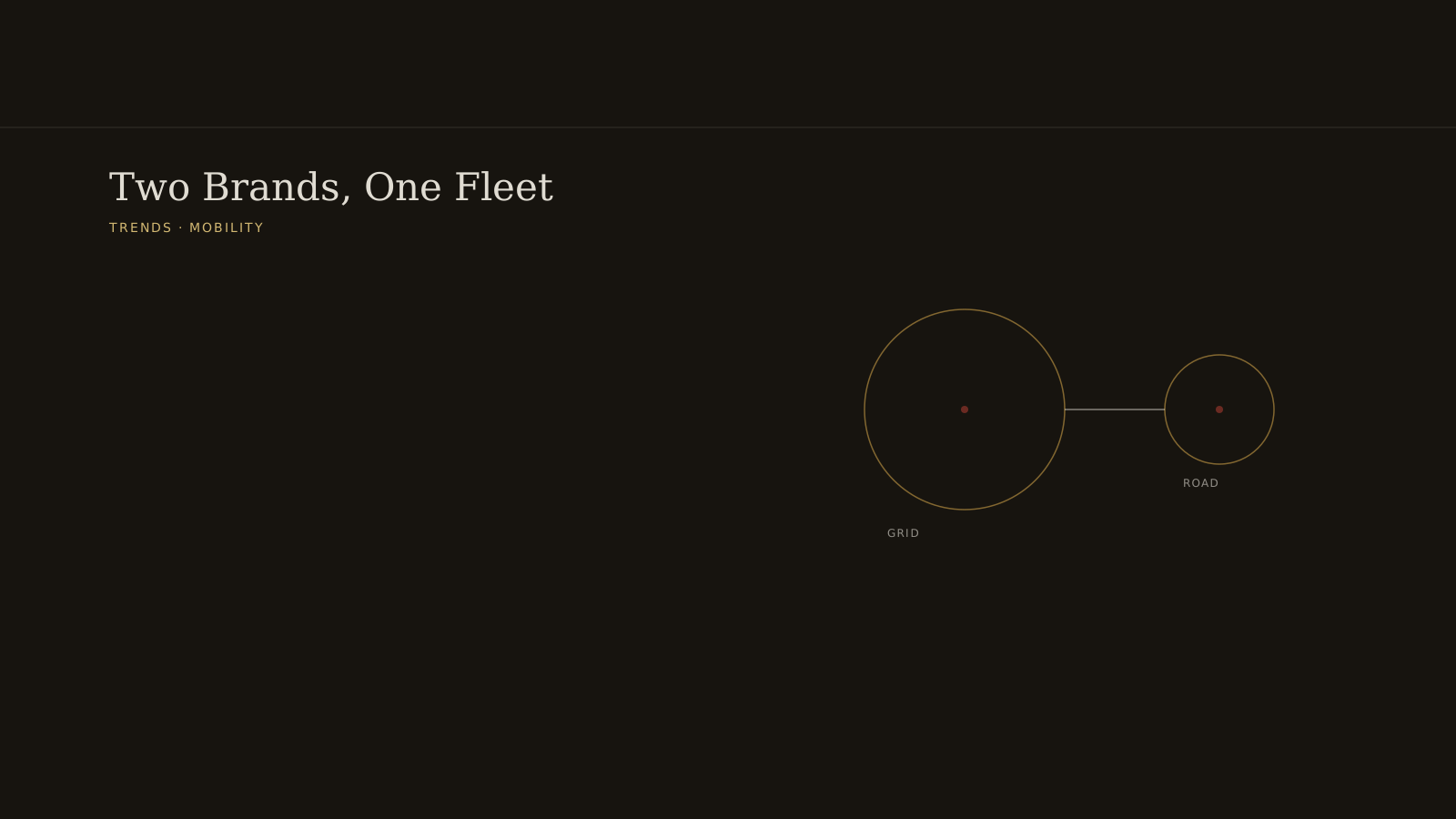
GreenCell Mobility Raised Rs 330 Crore for Buses. The Real Asset Is the Brand It Built Around Them.
GreenCell Mobility's fresh Rs 330 crore round is being read as an EV infrastructure story. The more interesting decision is why the company built NueGo as a separate consumer brand instead of selling bus seats under its own name.

The 'Powered By' Badge Is Free Distribution Most B2B Startups Underuse
B2B infrastructure startups fight to get their name onto a partner's checkout page or app footer, then treat the resulting badge as a technical formality instead of the only ad impression they'll never have to pay for.
Showing the Cost Breakdown on Your Product Page Is a Trust Bet Most Brands Won't Take
A handful of D2C brands now show exactly what a product costs to make before marking it up. It reads like a risk. It behaves like one of the cheapest trust-building moves available to a brand with nothing to hide.

An Open House Is the Cheapest Brand Event a Startup Never Throws
Startups will sponsor a conference booth before they'll open their own office to twenty customers for an afternoon - even though the second one builds more trust for a tenth of the cost.
A Brand Story Needs a Villain, Not Just an Origin
Founders write their brand story as a timeline - here's when we started, here's what we built. The stories people actually repeat have an enemy in them, and most companies are too polite to name one.
Founder-Market Fit Deserves as Much Attention as Product-Market Fit
Investors ask whether the product fits the market. They rarely ask whether the founder does - whether this specific person, visible to this specific audience, is the one who should be telling the story. Most founders never ask themselves either.
The Public Roadmap Is a Trust Document. Most Startups Treat It Like a Backlog.
A public roadmap promises customers a future the company controls. Startups keep publishing it like an internal to-do list, then wonder why nobody believes the next 'coming soon.'
Startups Killed the Business Card. Nobody Designed What Replaced It.
Founders stopped carrying cards years ago and never replaced them with anything as deliberate. The in-person handoff that used to carry a brand's first impression now runs on whatever happens to be open on a phone screen.

Zen Technologies Is Paying Rs 135 Crore for a Defence Startup. The Real Deal Term Is Who Stays in Charge.
Zen Technologies' board has approved a deal for control of Cogknit Semantics, the Bengaluru startup behind a battlefield command system for Indian tanks. The headline is the price. The clause that matters is that Cogknit's founders keep running it.
The Campus Talk Founders Treat as a Favor Is a Distribution Channel
A guest lecture at a business school gets filed under ego or obligation, never under marketing. That's a mistake - it's one of the few rooms where the audience remembers you for a decade.
Where You Put the Office Is a Brand Decision, Not Just a Cost One
Founders pick an office address by rent per square foot and commute time, then wonder why the choice keeps showing up in recruiting pitches and investor meetings as something else entirely.
Tessolve Raised $75 Million to Go Shopping, Not to Build
Hero Electronix-owned Tessolve just raised $75 million from a first-time India investor to fund acquisitions it hasn't named yet. That's a different kind of funding announcement - and a different kind of bet on trust.
The Font on Every Customer Email Is a Positioning Decision
Founders spend weeks arguing over a logo, then let whatever font shipped with the invoicing tool decide what the brand sounds like in writing. That choice is backwards.
Your Push Notification Copy Is Written by Whoever Was Free That Day
Most founders obsess over the homepage and ignore the one channel that reaches a customer's lock screen uninvited. That's backwards.
The Unsubscribe Page Is the Last Page Most Customers Will Ever See
Brands design every page a customer sees on the way in and abandon the one page they see on the way out. That's the page people actually remember.

Urban Company Just Told the Market What It Thinks Its Brand Actually Is
A board approving a fresh capital raise while already holding cash on the balance sheet isn't a funding story - it's a public statement about which business the brand is becoming.

Your Customer's Year-in-Review Email Outperforms Your Funding Announcement
Founders chase press coverage for milestones the customer never sees. The annual recap email, built around the customer's own year, gets forwarded for free.
Zetwerk's Anchor Book Is the Only Marketing Most Investors Will Ever See
A B2B manufacturing company has no consumer brand to lean on when it goes public. So the names in its anchor round have to do the convincing instead.

Affiliate Marketing Looks Like Growth. It's Borrowed Trust With a Clock Running Out.
Affiliate programs show up on the dashboard as new customers at a fixed cost. What they actually are is someone else's trust, rented by the month - and most founders never notice when the rent comes due.

The Kirana Window Decal Is Still a Distribution Channel. D2C Brands Keep Skipping It.
Every rupee of a D2C brand's performance budget chases a screen. The sticker on the neighborhood kirana's glass door reaches the same shopper for less money and a longer memory - and almost nobody runs it as a real channel.

The Pant Project Just Raised ₹109 Crore to Open 125 More Stores. That's a Trust Bet, Not a Logistics One.
The menswear brand's new Series B is funding a jump from 25 stores to roughly 150 within three years. The hard part of that plan isn't real estate or inventory - it's whether a brand built on performance ads can earn trust across a counter.

The QR Code on Your Packaging Is Wasted Real Estate
Most Indian FMCG and D2C packs now carry a QR code somewhere on the box. Almost all of them lead to the same destination: nowhere a customer who just paid money would want to go.
Brand and Reputation Are Not the Same Word. Founders Keep Spending the Wrong One.
A brand is the story a company chooses to tell. A reputation is the verdict other people reach after watching what it actually does. Most founders manage the first and ignore the second.
Dhan Turned Unicorn by Refusing to Chase Zerodha's Customer. That's the Actual Story.
Raise Financial Services, the company behind trading app Dhan, crossed a $1.2 billion valuation on a $120 million Series B. The round matters less than the customer it deliberately didn't try to win.

The Product Sunset Email Is the One Trust Document Most Startups Still Get Wrong
Killing a feature or shutting down a product gets written like a changelog line. It should be written like the most important email that customer will read all year.

StockGro's Confidential IPO Filing Is a Bet That a Trading Game Can Grow Up Without Losing Its Users
AssetGro Fintech, the parent of social trading app StockGro, has confidentially pre-filed for an IPO of up to Rs 2,500 crore. The harder question isn't the valuation - it's whether a brand built on gamifying the stock market can carry that identity into a public listing.
Tell Employees the Runway Number, Not Just the Vision
Founders will disclose their own salary before they will disclose how many months of cash is left in the bank. The second number is the one that actually builds trust with a team.
Most B2B Content in India Is Written for the Champion, Not the Person Who Signs the Cheque
The deck, the case study, and the demo are all built to win over the person who invited the vendor in. They rarely survive contact with the person who actually approves the spend.

Boldfit Raised Rs 400 Crore to Go Offline. The Brand Risk Is Bigger Than the Capex.
The KL Rahul-backed fitness brand's Series B is being read as a D2C-to-retail story. The harder part is proving in-store that a screen-built brand earns trust the same way on a shelf.

Clueso's Pitch Isn't the AI. It's the Logos: Atlassian, Zendesk, Gainsight, Already Signed.
The Bengaluru-built startup's $10 million Series A leans on enterprise customers most early B2B founders would consider out of reach. That's the actual lesson, not the agentic video tech.

The Warranty Card in the Box Is the Last Trust Document D2C Brands Ignore
Brands obsess over the unboxing moment and then hand the customer a photocopied slip of legal boilerplate. The warranty card is still read - just not by the people writing it.
The Wedding-Season Answer to 'What Do You Do' Is a Founder's Realest Pitch
No investor memo gets rehearsed as often as the answer a founder gives their relatives at a cousin's wedding. It's the most honest version of the pitch most founders will ever give.

DailyObjects Raised Rs 332 Crore. The More Interesting Number Is the 18x.
DailyObjects' Series C is being covered as a funding story. The detail that says more about where the brand actually stands is the early investor taking an 18x exit on the same round.

The ESOP Email Nobody Rewrites Twice
The email explaining stock options gets drafted once, by legal, and sent without a second look. It gets forwarded for years - to spouses, to friends weighing two offers, to the next hire deciding whether to trust you.

Founders Chase the Investor's Applause and Miss the Customer's Memory
Investor updates get workshopped, timed, and rewarded with a fast 'great update!' Customer-facing writing gets whatever's left over - even though it's the one a person remembers for years.

Selected Just Dropped 'Homme' From Its Name in India. The Suffix Was Doing More Work Than It Looked.
Bestseller's menswear label spent eleven years as Selected Homme in India before this season's rebrand dropped the qualifier. That's not a logo update - it's a bet that the market finally knows the name without an explanation attached.

The Soft Launch Is a Confidence Problem Wearing a Strategy Costume
Founders describe quiet launches as deliberate restraint. Half the time the real reason is simpler - they're not ready to be watched, and 'soft launch' is a nicer way to say that.
Announcing Bad News on a Friday Doesn't Bury It. It Just Tells People You Tried To.
The Friday news dump is a holdover from a news cycle that doesn't exist on WhatsApp and Twitter anymore. In an always-on feed, timing an announcement to minimize attention reads as exactly what it is.

TVS Automobile Solutions Raised Rs 425 Crore. The Product Being Funded Is Trust, Not Metal.
myTVS closed a Series D led by a Gulf investor's CE-Invests to expand its car-servicing network into the Middle East. The round is a bet on a brand built entirely on standardized service experience, not on a single hero product.
The Journalist Relationship Starts After the Story Runs, Not Before
Founders pour weeks into landing a reporter's attention and go quiet the moment the piece publishes. The founders who get covered a second and third time treat publication as the start of the relationship, not the end of it.
The Onboarding Call Nobody Reviews Twice Is the Best Research You Have
Founders commission customer surveys and ignore the recorded onboarding calls already sitting in their helpdesk tool. The first confused ten minutes of a new customer's call is better copy than any survey response.
Why Founders Who Publish Their Own Salary Build More Trust Than the Ones Who Don't
A handful of Indian founders now state their own pay in public, on purpose. It reads as a strange flex until you notice what it actually signals to employees, customers, and investors.
Lumio Raised $12 Million for Smart TVs. The Pitch Is the Software Layer, Not the Hardware.
The Series A led by Blume Ventures backs a consumer electronics brand that's already profitable on hardware. The harder bet is the AI discovery layer it's building across every screen it sells.
The Order Tracking Page Is a Brand Moment Most Founders Hand to the Courier
Between checkout and delivery, most D2C brands disappear - the tracking link just points to the logistics partner's generic page. That gap is where a customer's anxiety lives, and almost nobody is managing it.

Your OTP SMS Is the Most-Read Message Your Brand Sends All Day
Open rates on marketing email hover in the twenties. The one-time password text sitting next to it gets read in seconds, every time - and almost no company treats it as a brand surface.
The Acquihire Announcement Is Written for the Cap Table, Not the Customer
When a struggling startup gets quietly absorbed for its team, the press release reads like a win for everyone involved. The customers left holding an orphaned product rarely get a straight sentence about what happens to them.
The Founder WhatsApp Group Is Doing More PR Work Than Most PR Agencies
The fastest way a reporter finds a quote, a reference customer, or a warning about a vendor is still a founder asking a group of other founders. Almost nobody treats that group chat as the distribution channel it actually is.
Gramiyaa Raised Rs 18.65 Crore for Cold-Pressed Oil. The Crowded Claim Was the Risk, Not the Capital.
The Series A led by Optiscape Network Holdings funds a brand competing in a category where every player makes the same purity claim. The money buys distribution - it doesn't buy a reason to be believed.

Sunfox Raised $7 Million to Put ECGs in 20,000 Villages. The Pitch Isn't the Device - It's Who Trusts It.
The Dehradun medtech company's Series A scales a portable ECG platform built for frontline health workers, not hospitals. The harder sale was always getting a rural health worker to trust a machine over their own judgment.

The White Paper Is a Sales Document. Most Founders Write It Like a Thesis.
B2B founders treat the white paper as proof of expertise and hand it to an engineer or an analyst to write. The ones that actually move a deal are written by someone who has sat in the sales call.
Desible.ai Just Raised Funding to Sell AI to Banks. The Hard Part Isn't the AI.
The Bengaluru startup's new round is a bet that agentic AI can run BFSI workflows. The harder bet is getting compliance-first institutions to trust a system that acts on its own.
The Founder Sabbatical, Announced Well, Reads as Strength - Not Exit
A founder stepping back for a few months is read as instability by default. The ones who get it right change that story before anyone else writes it for them.
The Churn Call Nobody Wants to Make Is the Best Marketing a Founder Can Do
Win-back emails are automated and ignored. A founder calling a churned customer directly is rare enough that it still works - and it tells you more than any exit survey.

A Seat on an Industry Body Is Earned Media Most Founders Ignore
Founders chase panels and press mentions but skip the industry association seat that actually makes journalists call them first.
Quanfluence Raised $10 Million for a Computer That Doesn't Exist Yet. That's the Whole Pitch.
The Bengaluru deeptech startup's photonic quantum computer is years from working at scale. Its $10 million round says Indian investors are now willing to fund the trust problem, not just the product.
A Founder's Personal Brand Is Now Part of the Pitch Deck, Whether They Put It There or Not
VCs no longer wait for the deck to form an opinion of a founder. They've already read the LinkedIn posts, the old tweets, and the one Reddit thread - and that research happens before the first call.
Pitch the Journalist Before You Have News
Most founders meet a reporter for the first time while trying to get something covered. The founders who get covered consistently met them months earlier, with nothing to ask for.

When There Are Two Founders, One of Them Has to Be the Face - and the Company Should Decide That, Not Drift Into It
Co-founder teams often split external visibility by instinct rather than choice. That default usually picks the wrong person, or no one, and the company pays for it quietly for years.
Zomint Raised Rs 36 Crore and Never Bought a Single Customer to Get There
Wealth-management startup Zomint closed a Rs 36 crore seed round having grown entirely on the founders' own financial-education content. The round is the headline; the acquisition channel is the actual story.

Aignosis Raised Rs 4 Crore to Screen Children for Autism. The Real Product Is What It Refuses to Claim.
Jaipur-based Aignosis closed a small seed round led by Antler and Nikhil Kamath for an AI screening tool - and the restraint in what it promises is doing more trust-building than the cheque size.

Flying a Journalist to Your Factory Still Beats Emailing Them a Press Release
The press release reaches an inbox. The press trip reaches a person - and only one of those writes the story you actually wanted.
Moving Your Startup to Bangalore Is the Default. Staying Put Is the Strategy.
Relocating to a metro is the decision nobody questions. The founders who stay in their home city on purpose are making a sharper bet than the ones who leave.

Stealth Mode Isn't Hiding the Product. It's Choosing the Room You Walk Into First.
Founders treat stealth mode as a secrecy problem. It's actually a sequencing problem - who gets to see the company before the rest of the world forms an opinion of it.

Your Tagline and Your Mission Statement Are Not the Same Sentence. Most Founders Write One and File It Under Both.
A mission statement explains why the company should exist. A tagline has to work on a business card. Collapsing them into one line costs a company both jobs.
Founders Spent a Decade Optimizing for Google. The Next Search Box Doesn't Link Anywhere.
When a customer asks an AI assistant to recommend a product instead of searching for one, there's no blue link to win. There's only a sentence, and your brand is either in it or it isn't.
A Co-Founder Leaving Is a Brand Event. Most Startups Still Handle It Like a Legal One.
The LinkedIn post goes up, the lawyers are satisfied, and the actual audience - customers, employees, the next hire - is left to guess what really happened.

A Reporter Asks for Your Media Kit. Most Founders Are Building It Right Then.
The companies that look effortlessly press-ready aren't improvising faster. They assembled the kit months before anyone asked for it.

Seeds Fincap's Lead Investor Is a Foundation, Not a Fund. For a Rural Lender, That's the Real Pitch.
Seeds Fincap raised over Rs 100 crore in a Series B led by the Michael & Susan Dell Foundation. For an NBFC lending into semi-urban India, the lead investor's name is doing marketing work a term sheet never could.
Beyond Appliances Just Raised Rs 110 Crore to Build Factories, Not Ads
The kitchen appliance startup's Series B is going into R&D and a new manufacturing plant, not a performance marketing line item - and one detail in the announcement explains why that's the right call.

Founders Pick Conference Speaking Slots by Ego, Not Audience Fit
Saying yes to every stage invite feels like momentum. Most of the time it's a founder spending their scarcest asset - credibility in front of a specific room - on a room that was never going to buy anything.

Most Founders Treat Investors as Capital, Not as a Press Bench
Founders will ask an investor for a warm intro to the next VC without hesitation, then never once ask for an intro to a journalist, a customer, or a stage - the same network, used for one-tenth of its value.
How Fast You Pay Your Vendors Is a Brand Decision
Founders design every customer-facing touchpoint on purpose and leave vendor payment terms to finance by default - but suppliers talk, and that reputation travels faster than any campaign.
Why the First Agency a Startup Hires Should Be PR, Not Performance Marketing
Founders default to performance marketing first because the dashboard shows a number by Friday. The channel that actually compounds shows up on a slower clock - and needs to start earlier than most founders think.

House of Chikankari Raised Rs 25 Crore. The Pitch Was Never the Discount.
A six-year-old chikankari label just closed a Series A without running the markdown playbook that most Indian D2C fashion brands lean on to show growth. That restraint is the actual news.
The Press Release Is Dead. The Founder's Direct Pitch to a Reporter Isn't.
Startups still budget for a polished press release nobody opens. The pitch that actually lands is three sentences, sent by the founder, to one reporter who covers the beat.
The Customer You Turn Away Is a Positioning Statement
Founders write ICP decks nobody reads and then take every customer who shows up anyway. The refusal is the only part of positioning the market actually believes.
Your Competitor's Customer Is Better Research Than Your Own Churn Data
Founders mine their own churn surveys for answers and get polite, half-honest ones. The customer who chose a competitor and stayed has no reason to be polite - and that's exactly why they're worth calling.
The Founder Who Sounds Like Three Different People Across Three Platforms
Polished on LinkedIn, sharp-elbowed on X, loose in the customer WhatsApp group - most founders don't notice they're running three different voices until a follower screenshots the contradiction.

Libas Didn't Make Itself Younger. It Launched Gerua Instead.
Libas could have stretched its own brand toward younger, first-time office-goers. Instead it built a separate label, Gerua, just for them - a narrower bet that's usually the harder one to make.
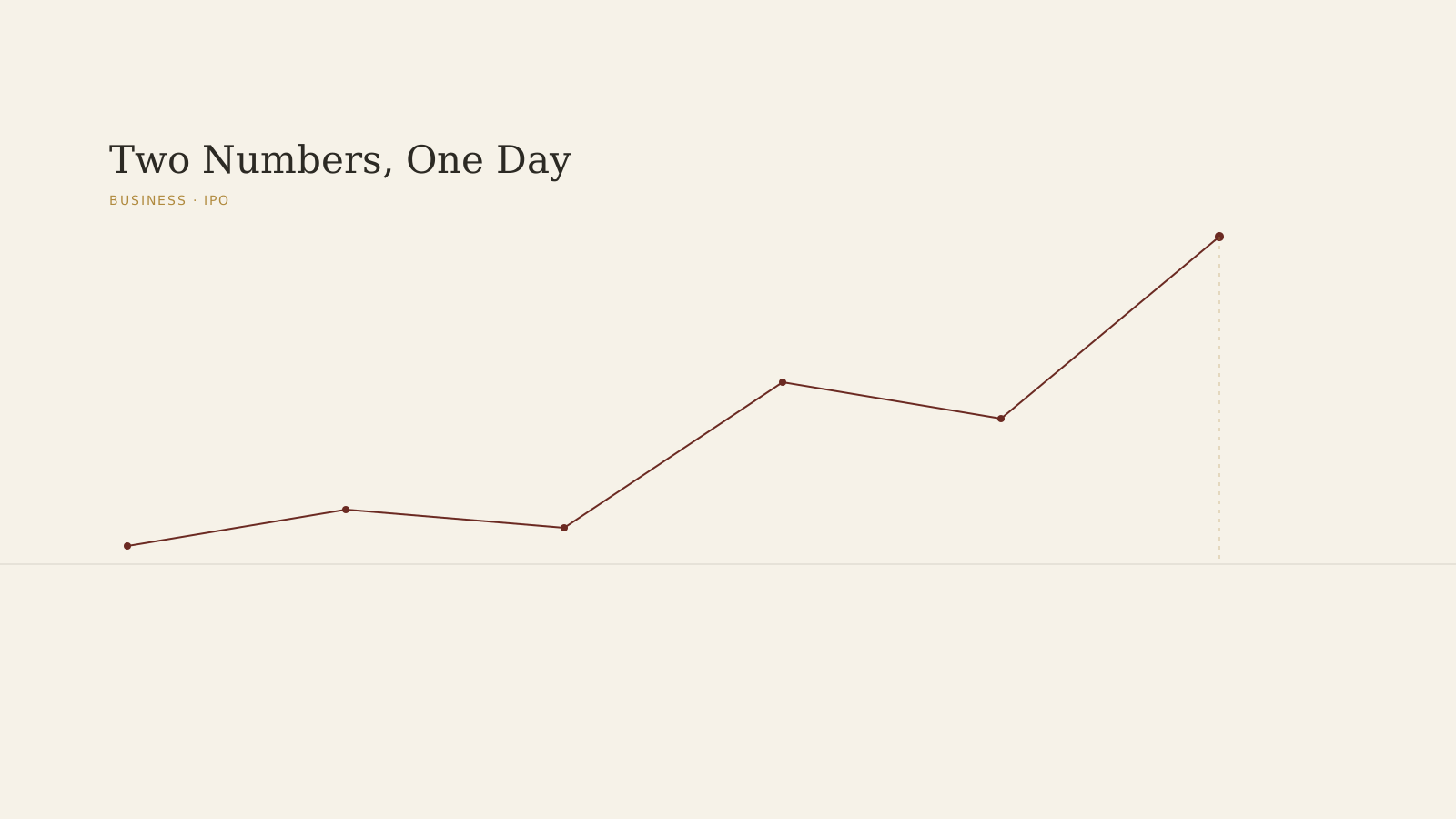
Moneyview Listed Up 64%. That Number Measures the Wrong Thing.
Moneyview's shares jumped as much as 64% on debut after a 98-times-oversubscribed IPO. The listing pop is getting the headlines, but it's the weaker signal of the two numbers that day actually produced.
Founders Rehearse the Pitch. They Should Rehearse the Hard Question First.
Most founders walk into a press interview having practiced the story they want to tell and never once the question they're dreading. That gap is where the bad quote comes from.

Balwaan Krishi's 100 Crore Raise Is a Bet on Rural Trust, Not Just Rural Reach
Balwaan Krishi raised 100 crore rupees in Series B funding to expand farm equipment manufacturing and its dealer network into southern India. The harder expansion is convincing a new region's farmers to trust a brand they've never seen in a field before.

India's Festive Discount Calendar Is Training Customers to Never Pay Full Price
Diwali, Dussehra, the end-of-season sale, the next Diwali - Indian consumer brands have built a discount calendar with almost no gaps left in it. The customer habit that calendar creates is the opposite of the one brands think they're building.

Gravity Raised $15 Million to Fix India's Interior Materials Market. The Harder Problem Is Trust.
Gravity, built by two former Livspace leaders, raised $15 million to bring India's fragmented kitchen and wardrobe supply chain onto one platform. The capital solves distribution. It doesn't automatically solve the reason the category stayed fragmented in the first place.

The Product Recall Notice Is a Trust Document
Most brands write their recall notice only after the problem is already public, under legal review, and stripped of anything resembling their actual voice. The ones that handle it well write the template long before they ever need it.

The Subscription Renewal Email Nobody Bothers to Rewrite
Most brands write their renewal email once, at launch, and never touch it again - even as it becomes the single most-read message they send. That neglect is a choice, and customers notice.
Arivihan's $10 Million Bet: Tier 3 India Will Trust an AI Tutor Before Tier 1 Does
Arivihan just raised a $10 million Series A to push an AI-only tutoring platform deeper into small-town India, where it says 80% of its subscribers already come from. That reverses the usual EdTech adoption story.
Blitz's Valuation Jumped 2.5x - and Its Brand Is Invisible to the Customer by Design
Quick-commerce fulfillment startup Blitz just raised Rs 28.7 crore at a valuation that climbed from Rs 175 crore to Rs 440 crore. The customer who gets their order in ten minutes has likely never heard of it - and that's the point.

A Breach Disclosure Is a Trust Document, Not a Legal One
Most companies write their breach notification with a lawyer alone in the room. The ones that keep customers write it with a lawyer and a founder in the room, in that order of drafting but not of priority.

The Host-Read Ad Still Beats Every Programmatic Buy
A podcast host saying your product name in their own voice converts better than a banner that followed the listener across four apps - and founders keep underspending on it because it doesn't look like performance marketing.
Your Out-of-Office Reply Is a Brand Document Nobody Proofreads
Founders spend weeks on the website and ten seconds on the autoreply - even though it's one of the few brand touchpoints a stranger reads voluntarily, in full.
Most Case Studies Are Written for the Prospect Who Already Decided
The case study page reads like a thank-you note, not evidence. The buyer who still needs convincing gives up before the first metric.

'Contact Us for Pricing' Is a Trust Tax Most B2B Founders Don't Realize They're Paying
Hiding the price behind a sales call doesn't protect deal size. It tells the buyer you're still guessing what the product is worth.

The Explainer Video Explains the Product. It Should Explain the Problem.
Ninety seconds of screen recording and a voiceover walking through features rarely converts anyone who didn't already understand why they needed the product.

Simple Energy's Rs 250 Crore Round Blends Debt and Equity. That Mix Is the Real Signal Ahead of an IPO.
The Bengaluru EV scooter maker raised fresh capital from a diagnostics-industry family office and a bank, not a mobility VC fund. That lender composition says more than the headline number.
Crusoe's Innerwear Rebrand Is Betting Comfort Needs an Emotional Pitch
Ahead of Diwali, the South Indian innerwear brand swapped an adventure-themed identity for an inclusivity-first one. The harder test isn't the new logo - it's whether 'confidence' can be sold with the same specificity as fit and fabric.
Your Customer Community Is Doing Marketing's Job, and Nobody Owns It
A WhatsApp group of customers helping each other out is free marketing with no brief, no budget line, and usually no one on the team watching closely enough to notice it exists.
Fifth Sense's Pre-Seed Bet: India's Perfume Market Needs a Climate Argument, Not Just a Scent
The D2C fragrance brand raised Rs 6.3 crore on a positioning most perfume marketing skips entirely - that Indian heat and humidity break imported formulations, and a fragrance engineered for local conditions is a product claim, not a patriotism pitch.
Open-Sourcing Part of Your Product Is a Distribution Channel, Not a Donation
Founders treat open source as charity or a recruiting gimmick. The ones who get real growth from it treat it as the top of a funnel - and build the funnel on purpose.
The Handoff From Sales to Support Is Where Brand Trust Actually Breaks
The sales call sells confidence. The first support ticket tests whether that confidence survives contact with reality - and most companies never design for the gap in between.

The Acquisition Announcement Nobody Drafts Until the Deal Is Already Signed
By the time term sheets are signed, there's no time left to write a good version of the story. The startups that announce well wrote the explanation months before they needed it.

Founders Monitor Reddit for Mentions. The Useful Move Is Replying to Them.
Most brand teams track what gets said about their company on Reddit the way they'd track a stock price - passively. The founders who actually show up in the thread get a different outcome entirely.
Founders Chase the Podcast. The Book Is the Slower, Better Bet.
A podcast needs a guest list and a release schedule forever. A book gets written once and keeps opening doors years after the launch week nobody remembers.

Rio Health Raised Rs 43 Crore to Deliver Medicine Fast. The Repeat-Order Number Is the Real Pitch.
The Delhi NCR startup's pre-Series A funds five times more dark stores, but the number worth watching is the near-80% repeat rate - proof that customers trust the service enough to reorder medicine without re-checking it first.
BIBA Didn't Stretch Its Brand for Gen Z. It Split It Off Instead.
BIBA launched BIBA NXT as a separate sub-brand for younger, contemporary ethnic wear rather than redesigning its core line. That restraint is the actual lesson for legacy brands chasing a younger buyer.
The Founder's Calendar Is a Brand Document
What a founder says yes and no to in public is read as a statement of priorities, whether or not anyone intended it that way. Most founders manage this by accident.
The Pilot Customer and the Reference Customer Are Not the Same Person
The first customer who took a risk on an unfinished product and the polished case study that later sells to everyone else are treated as the same relationship. Conflating them costs founders their most loyal accounts.
Nobody Reads the Privacy Policy. Everyone Judges It Anyway.
Almost no user opens the privacy policy before signing up, yet the page still shapes whether people trust a brand with their data. Here is why it deserves a writer, not just a lawyer.

Ultraviolette's $85 Million Bet Is on Being a Global EV Brand, Not an Indian One That Exports
Ultraviolette raised $85 million to fund new platforms and a 2027 US entry. The more interesting story is the brand decision underneath the round: it is building for global roads from day one, not retrofitting an India-first product later.

Arovia Consumer Raised Rs 100 Crore to Buy Regional Food Brands, Not Build One
Soulfull founder Prashant Parameswaran's new venture, backed by Fireside Ventures, is taking stakes in family-owned food brands in cities like Kochi, Coimbatore and Indore that already have loyal customers and working distribution. The bet is on brand equity that already exists, not brand equity built from zero.

Direct Mail Is the Least Crowded Channel in Indian D2C Right Now
Every founder's inbox, DM and WhatsApp thread is saturated with brand messages competing for the same three seconds of attention. The postbox, for most urban Indian households, is nearly empty.

Your Hold Music Is a Brand Decision. Right Now, Nobody's Making It on Purpose.
The phone system plays whatever came pre-loaded, the IVR menu was written by whoever set up the number, and a frustrated customer hears both while already annoyed. That combination is a brand touchpoint on autopilot.

Mensa Brands Renamed Itself BRND.ME Right Before Its IPO. The Timing Is the Real Story.
Ananth Narayanan's four-year-old brand platform flipped its domicile to India and dropped the Mensa name for BRND.ME as it heads toward a public listing. A rebrand this close to an IPO usually means the story being sold to investors has changed.

What Gets Said About You on Reddit Is a Brand Page Nobody at the Company Is Managing
The comparison thread where real customers argue about your product, unprompted and unedited, ranks on Google before your own website does for half your category's buying questions. Most brand teams have never read it.

A Compliance Badge in the Footer Is Not Marketing. Explaining What It Means Is.
SOC 2, ISO 27001, FSSAI - companies paste the mark and call the job done. The certificate is proof of a process. The process is the actual story, and almost nobody tells it.
Dextr AI Raised $6.7 Million to Sell Hospitality a Voice Agent, Not a Chatbot. The Distinction Is the Whole Pitch.
Dextr AI's seed round, led by Elevation Capital, is betting that hotels don't want another FAQ bot. They want the phone answered and the reservation closed, the way a trained front desk would do it.

Most Funding Announcements Lead With the Number. The Story Underneath It Is the Actual News.
Company raises crore from investor - that headline shape tells a reader nothing. The one day the whole market is watching, most founders waste it on paperwork.

Founders Reply to Every Five-Star Review. The One-Star Ones Are Where the Brand Actually Gets Built.
Most companies treat public reviews as a scoreboard to protect. The reply to a bad one, written in public, does more brand work than a hundred good ones ever will.
Rivet Raised $10.5 Million to Put Humans Back Into Matchmaking. The Bet Is Against Swiping, Not Tinder.
Ex-Tinder India executive Taru Kapoor's new dating startup has strangers vote on whether two people should match. Peak XV, Shine Capital, and Blume Ventures just funded the reversal of the mechanic she helped scale.

Birkenstock's New Hyderabad Store Isn't Selling Sandals. It's Selling an Argument.
Birkenstock has opened a 3,216-square-foot mono-brand store in Banjara Hills built to explain its footbed construction, not just stock a shelf of sandals. For a premium import that still has to justify its price in a comparison-shopping market, that is a more useful kind of retail than another marketplace listing.
Treat Your First 100 Customers Like Investors. Most Founders Treat Them Like Traffic.
The first hundred customers get less individual attention than customer ten thousand at most startups, exactly backwards from where the leverage sits. Early customers write the reviews, referrals, and case studies that convince the next ten thousand, if anyone treated them like it mattered.
Founders All Sound the Same on LinkedIn. Here's Who They're Actually Writing For.
Founder content across every category reads identically because most of it is aimed at other founders and investors scrolling the same feed, not the customer who is supposed to act on it. The fix is not a better hook. It's a different reader.
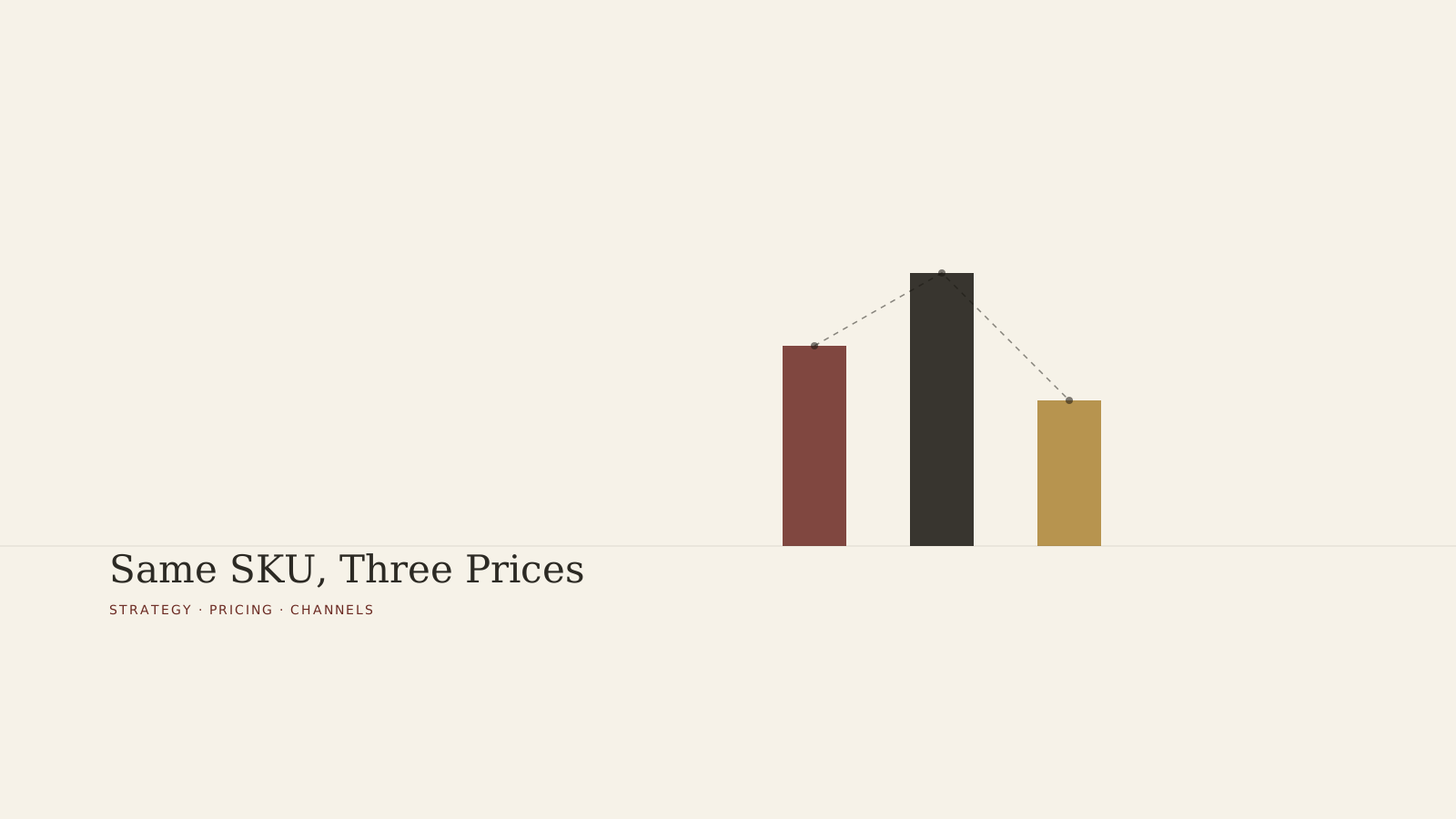
Your Price Shouldn't Depend on Which App the Customer Opens
The same product often carries three or four different prices across a brand's own site, the marketplaces it sells on, and the quick-commerce apps that stock it. Customers notice before founders do, and what they conclude isn't about the discount, it's about whether the brand can be trusted at all.

Your API Docs Are the Only Sales Pitch a Developer Will Actually Read
The buyer evaluating your dev tool skips the homepage and goes straight to the documentation. If it reads like an afterthought, so does the product.
Ema Raised $77 Million by Refusing to Call Itself a SaaS Company
Ema's Series B values the Bengaluru-and-San-Francisco startup at more than four times its last round, built on a single stubborn positioning bet: agents replacing software, not sitting alongside it.

PB Fintech Lost Rs 31,000 Crore in a Day Because Its Growth Engine Was Never a Brand
IRDAI's proposal to cap insurance distribution commissions wiped more than a third off PB Fintech's market value in one session - a reminder that a distribution business and a brand business fail on completely different timelines.

The Rejection Email Nobody at Your Company Has Reread Since an Intern Drafted It
Careers pages get design reviews and interview processes get retros. The rejection email - the last thing most candidates ever hear from you - usually hasn't been touched in years.
The Status Page Is the Only Honest Document You Publish During an Outage
When something breaks, customers don't read your apology tweet - they refresh the status page. Most founders treat it as an ops afterthought instead of the trust document it actually is.
Most Brand Guidelines Document Colors. The Good Ones Document Decisions.
A 40-page PDF of hex codes and logo clear-space rules won't tell your support team how to apologize or your sales team how to say no - and that's the gap that actually costs founders money.
Founders Import the Funnel and Skip the Relationship It Replaced
The stage-by-stage growth funnel was built for a market that trusts strangers by default. Most of India isn't that market yet, and founders who copy the playbook without the substitute for trust lose the deals the funnel can't see.

The Client Logo Wall Says Less Than the Client Who Renews
Founders spend real effort chasing recognizable logos for the homepage and almost none publishing who actually stayed - even though renewal is the harder claim to fake.

Nat Habit Just Rebranded Near Rs 250 Crore. That Timing Is the Real Story.
Most D2C rebrands happen when growth has stalled and the brand needs rescuing. Nat Habit rebranded while growing into 10,000-plus stores - a much harder bet to get right, and a more useful one to study.
Founders Spend on Brand Before They've Earned a One-Line Description
A rebrand, an ad budget, or a PR retainer can't fix a company nobody can describe in one sentence - and most founders find out too late that this was the actual problem.
Your Chatbot Already Has a Personality. Nobody Designed It.
Most founders never write a line of tone guidance for the bot that answers customers first. It ships with a personality anyway - usually apologetic, generic, and forgettable.

Definedge Raised Rs 22 Crore After Building 14 Products Nobody Marketed
The Pune wealth-tech firm closed its first real institutional round five years after quietly building an ecosystem of trading tools with almost no outward marketing. Product first, capital second is a rarer sequence than most fintech founders admit.

The Founder's DMs Are a Sales Channel Nobody Staffs.
A cold message straight to a founder converts at a rate no contact form or outbound email touches, and most founders let it sit unread for three days. The response time is the entire product.
InCorp Advisory Just Disappeared Into Ascentium. That's the Risk Every Roll-Up Rebrand Takes.
InCorp Advisory India renamed itself Ascentium India this week, folding seven acquired firms and years of individually earned client trust into one new global name. The bet is that a bigger identity is worth more than the names clients already recognized.
Your Product Hunt Launch Is Not a Contest. It's a Distribution Channel Most Founders Use Once.
Founders treat launch day like a scoreboard - upvotes, rank, a badge for the homepage - then let the traffic evaporate by evening. The ones who actually benefit treat it as raw material for the next six months, not a one-day event.

The Best Marketing Channel Most Companies Ignore Already Left the Building
Ex-employees keep talking about a company long after they stop being paid to. Most founders never manage that conversation, until an alumnus becomes the loudest critic instead of the best reference.
Show the Factory Floor. It Outperforms the Ad Campaign.
Indian D2C brands spend heavily on polished campaigns while the thing that actually earns trust - how and where the product gets made - stays hidden. That's backwards, and increasingly, a wasted advantage.
The Platform a Founder Picks Is a Positioning Decision, Not a Habit
Founders default to whichever app they already scroll, then wonder why the audience they build there doesn't match the buyer they actually need. Where you show up is part of the pitch.

Most Influencer Marketing in India Rents Trust It Never Learns to Own
D2C brands keep renewing creator contracts instead of converting that borrowed credibility into something that survives when the contract ends. Few ever notice the difference until the spend stops.

Spinny Filed Its IPO Papers in Secret. The Silence Is the Strategy.
Spinny has confidentially pre-filed for an IPO expected to raise up to Rs 3,000 crore, targeting a 2027 listing. For a used-car brand built entirely on buyer trust, controlling the story before the numbers go public is the smarter opening move.
Brand Debt Accumulates Like Tech Debt. Almost Nobody Budgets to Pay It Down.
Every inconsistent deck, outdated pitch line, and orphaned old logo file is a small loan against future trust. Founders keep taking on more without ever scheduling a repayment.

The Conference Booth Is a Hiring Channel Dressed Up as a Sales Expense
Founders budget event sponsorships against leads and wonder why the math never works. The real return shows up months later, on the careers page.
The Customer Advisory Board Is Marketing, Not Just Product Research
Founders treat customer advisory boards as a product-feedback ritual. The real return is the trust and testimony no ad budget can buy.
DheyaTech Raised Rs 43 Crore for Gas Turbines. The Pitch Is Import Substitution, Not Just Thrust.
DheyaTech's pre-Series A funds India's first indigenous small gas-turbine engines. The harder sell than the technology is convincing buyers used to imported names to trust a first-time domestic supplier.
Founders Chase the National Business Paper. The City Press Converts Faster.
A national feature is a vanity metric for the founder's parents. A regional trade or city story reaches the actual buyer, supplier, or hire sitting three streets away.

Loyalty Points Commoditize a Brand. Status Does the Opposite.
Most loyalty programs are just a slower discount, dressed up as a rewards tier. The ones that build real attachment sell status, not currency.

Scarcity Only Works as Marketing When the Brand Can Prove It's Real
Indian D2C brands love a banner that says 'only 200 units left,' resetting every Monday. The tactic still works - but only for the handful of brands willing to actually run out.
Tata Motors Renamed Its Car Business TATA.CARS. The Real Story Is What the Old Name Could No Longer Hold.
Tata Motors' passenger-vehicle arm has rebranded as TATA.CARS following last year's demerger that split cars from trucks into two separately listed companies. The new name is a symptom of a corporate structure problem more than a marketing idea.
The Terms of Service Page Is the Only Thing Everyone Agrees To and No One Writes
Every customer clicks 'I agree' without reading a word, but the tone of that page is the last honest signal a brand controls once the lawyers get involved. Most companies hand it over entirely and never look at it again.

The Founder's Google Search Results Are the Real About Page
Nobody reads the About page before deciding whether to trust a founder. They search the founder's name and read whatever Google decided to show them instead.
Kissht's Parent Approved an ₹832 Crore Raise Four Months After Its IPO. The Investor List Is the Real Announcement.
OnEMI Technology Solutions, the listed parent of digital lender Kissht, is going back to the market for fresh equity just four months after listing. The names writing the cheques matter more than the amount.

The Link Preview Card Nobody Designs
Every link a company sends renders as an image, a title, and two lines of text before anyone decides whether to click. Most founders have never looked at what that card actually says.
A Rebrand Is Not a Strategy. It's an Admission the Old One Failed.
Founders reach for a new logo when the actual problem is a decision they haven't made yet. A rebrand can fix a mismatch. It cannot fix an unresolved bet on who the company is for.

Firi's $3M Seed Bets That Beauty Quick Commerce Needs an Opinion, Not Just Inventory
Firi just raised $3 million to deliver beauty products in nine minutes, but the round's real signal is who backed it and what the startup refuses to stock.

The Founder Brand Has an Expiry Date
A founder's personal following is the fastest way to build a company's early credibility, and left alone, the biggest constraint on the company's later value. The transition has to be planned, not discovered.

The Best Founder Content Is Operational, Not Inspirational
Founders default to lessons and conviction because they are easy to write. What actually builds trust is the operational detail nobody else will share.

The Highest-Value Press Isn't the Profile - It's the Quote
Founders chase the profile piece and skip the relationship that actually builds credibility. The quote in someone else's story compounds faster than the feature about your own.

Why 'As Seen In' Logos Stopped Converting
A row of press logos used to signal legitimacy on sight. Buyers have learned that a logo means a company got mentioned once, not that anyone vouched for it - and the trust has moved somewhere more specific.
The Exit Interview Is a Brand Document Nobody Audits
Founders review the careers page and the offer letter. Almost none review what happens in the room when someone leaves - even though that conversation is the one departing employees actually repeat.

NSE's ₹6,746 Crore Anchor Round Is a Reminder That Not Every IPO Is About Raising Money
India's largest stock exchange pulled in ₹6,746 crore from anchor investors before its long-awaited IPO opened - and the company itself will not see a rupee of it.
Why B2B Founders Should Publish Their Vendor Stack
The 'built with' page is common in consumer tech and rare in B2B, even though B2B buyers are the ones running the harder diligence process before they sign.

The About Page Nobody Rewrites After Year One
Founders redesign the homepage four times and never touch the About page. It's read by exactly the people whose decisions matter most - and it's showing its age.

B2B Founders Think Their Buyer Is Too Rational for Brand. The Shortlist Says Otherwise.
Enterprise buying committees do run structured evaluations - but someone decides who even makes the shortlist before any scorecard gets filled in, and that decision is pure brand.
Fibe's Rs 750 Crore IPO Filing Is a Rebrand No One Announced
Fibe just got SEBI's nod to raise Rs 750 crore in a public listing, on profit that more than doubled. The company built its name on how fast it could lend - the prospectus has to sell something closer to the opposite.
The Free Tool Nobody Files Under Marketing
A calculator, a checker, a template that solves one real problem for free - most companies already have one buried in an internal Slack channel and never think to ship it.
VerifAIX Raised $5 Million to Sell Trust, Not a Testing Tool
VerifAIX's seed round funds an AI platform for verifying chip designs. Its harder job is convincing verification engineers - the most change-averse buyers in software - that an AI system's judgment is safe to rely on.

Amazon Now's 60-City Sprint Is a Bet on Bharat, Not Metros
Amazon's quick-commerce arm crossed a $1 billion annualised run rate and expanded past 60 Indian cities in under ten weeks, with towns like Warangal and Berhampur ahead of the next campaign push. That ordering says more than the number does.
Founders Keep Building Product Moats When They Need Distribution Moats
A better feature gets copied in a product cycle. A distribution advantage - an owned audience, a service network, a channel relationship - takes competitors years to replicate, if they ever do.
The Email Signature Nobody Has Touched Since 2019
Founders spend months on the logo and nothing on the one block of text every external email carries. That is real estate, and most of it sits vacant.

Flam's $40 Million Says Interactive Content Just Became a Budget Line
Flam raised a $40 million Series B with backing from QED Investors and Shah Rukh Khan. The signal isn't the celebrity name - it's that Google, Emirates, and KFC are already paying for what it sells.

The Restock Alert Is a Trust Document
Quick commerce trained Indian shoppers to expect certainty about inventory. The 'notify me' email that fires weeks late is where that expectation goes to die.

Reliance Calls Its New Ice Cream 'Accessible Premium.' That's a Harder Sell Than It Sounds.
Bombay Creamery launched at prices starting at Rs 10 while branding itself India's first accessible premium dairy brand - two words that don't usually sit in the same sentence, let alone the same tub.
The Changelog Is a Brand Document. Most Companies Write It Like a Bug Tracker.
Release notes reach a company's most engaged users on the one day they're paying the most attention, and most companies waste that attention on ticket numbers nobody outside the team can parse.

Glassdoor and AmbitionBox Are Marketing Channels. Most Companies Leave Them to HR.
A candidate checks employee review sites before they check the product page, and a founder who has never read their own company's listing is running blind on a channel that quietly shapes hiring, sales, and fundraising at once.
Your LinkedIn Headline Is a Pitch, Not a Job Title
It's the one line of copy a founder writes that gets read by investors, journalists, and prospective hires before anything else the company has published - and most founders let the platform autofill it.

Swish Raised Its Fourth Round in Two Years. The Real Story Isn't the Money.
The 10-minute food delivery startup closed $24 million in September, its second raise of 2026 alone - a pace that reads as conviction or as a warning sign, depending entirely on whether the company explains it.

Cold Outbound Is Your Brand's First Impression, Not Sales' Afterthought
Most founders let sales send cold email and LinkedIn messages however sales wants, using whatever template converts best. The prospect never experiences it as a sales tactic - they experience it as the first thing your brand ever said to them.

Nua Raised $50 Million to Stop Being Just the Period Brand
Nua's Series C is being read as a funding story. The harder question underneath it is whether a brand built on naming one category precisely can stretch into three without diluting the trust that made it credible in the first.
The Reference Call Is the One Sales Moment Marketing Never Touches
By the time a buyer asks to speak with an existing customer, every other part of the pitch has been rehearsed. The reference call is the one conversation your brand doesn't get to prepare for - and it's often the one that decides the deal.
Slice Built a Brand on Not Being a Bank. Now It Is One.
Slice just raised $100 million at a valuation 68 percent below its 2021 peak, years after merging into a small finance bank. The numbers are a fintech story. Whether its brand can survive becoming the thing it was founded to disrupt is the harder one.

Virality Is a Lottery Ticket, Not a Distribution Strategy
Founders keep asking how to make something go viral. That's the wrong question - a single hit doesn't build a channel, and chasing one is why so many brands have nothing left to say once the algorithm moves on.
Your Onboarding Email Has a Better Open Rate Than Anything Else You'll Ever Send
The welcome sequence gets written once, by whoever set up the billing or auth tool, and never revisited. It also has the highest open rate of any email a company will ever send. Most founders have never read their own.

Thought Leadership Is a Result, Not a Content Calendar
Founders keep asking their teams to produce 'thought leadership' the way they'd ask for a landing page - on a deadline, from a brief. It doesn't work that way, and treating it as a deliverable is why most of it reads as nothing.
Udaan Just Bought Swiggy's Logistics Arm. The Real Purchase Is a Cleaner IPO Story.
Udaan is acquiring Swiggy-owned LYNK Logistics for about Rs 500 crore in a share swap, folding B2B trucking capacity in-house as it prepares to go public. The deal is really about what an IPO prospectus needs to say about the business.

The Box Is the Last Brand Moment You Actually Control
By the time a product ships, the ad has been skipped, the influencer's version forgotten, and the algorithm has moved on. The unboxing is the last moment a D2C brand gets the customer's undivided attention, and most spend it on bubble wrap.
Early-Stage Brands Keep Chasing the Celebrity Deal They Can't Afford to Waste
A crore spent on a film star's endorsement buys reach a young brand can't yet convert. The same money spent on twenty college fests and neighbourhood events buys something rarer at that stage - a category of people who now genuinely know the brand.

How You Announce a Price Increase Matters More Than the Increase Itself
Most customers can absorb a reasonable price increase without blinking. What they can't absorb is finding out about it from their bank statement, which is how most Indian brands still choose to tell them.
Popo Global Ran Three Restaurant Brands Profitably for Nine Years Before Taking a Rupee of Outside Money
The Bengaluru operator behind The Pizza Bakery, Paris Panini and Smash Guys just raised its first-ever external round after nearly a decade of bootstrapped, profitable growth. The lesson isn't the cheque size - it's what running three separate brands under one roof, without capital, actually forced the company to get right.
The One Public Letter Most Founders Never Get Around to Writing
Public companies write a shareholder letter every year, mostly because they have to. Private startups have no such obligation, which is exactly why the rare ones that write one anyway earn a trust dividend nobody else in the category is collecting.

Circolife Raised $4.5 Million to Rent Out Air Conditioners. The Product It's Actually Selling Is a Guarantee.
The pre-Series A round backs a subscription model for commercial cooling, not a cheaper AC. The pitch only works if the brand can convince businesses that uptime, not equipment, is what they're paying for.
Someone Copied Your Product Last Week. The Copy Isn't the Problem.
The instinct is to prove you did it first. That instinct is exactly what makes the copy look credible - and the founder who ignores it usually wins the category anyway.
Two Founders Split the Interviews Evenly. That's Usually the Wrong Call.
Alternating who does the podcast, the panel, the press quote feels fair internally. Externally, it builds no one - because an audience can't form a relationship with a rotation.
Slikk Just Rebranded Away From Speed. That's an Admission the Delivery War Is Already Over.
The quick-commerce fashion app spent two years selling 60-minute delivery as the pitch. Its new identity leads with discovery instead - a bet that speed stopped being a differentiator the moment every competitor matched it.
The Win-Back Email Is the Last Honest Conversation You'll Have With a Churned Customer
Most win-back sequences open with a discount, which only works on the customers who left over price. Everyone else left over something a coupon can't fix, and the email never mentions it.

Brand and Growth Marketing Should Never Share a Boss
Most early-stage companies put all of marketing under one head, and then wonder why the brand keeps losing to whatever converts fastest this week. The org chart is the actual cause.
Carrum Mobility's Biggest Customer Just Became Its Lead Investor. That's Not Only Good News.
Uber has now put in $17 million across two rounds to become Carrum Mobility's anchor backer. It's a strong validation headline - and a customer-concentration story that deserves the same scrutiny as the funding number.
The Empty Screen Is Where a New User Decides to Trust You
The first thing most new users see inside a product isn't a feature - it's a blank dashboard with nothing in it yet. Most companies never design that screen on purpose, and it's costing them the moment that matters most.
The Invoice Is the One Document Every Customer Actually Reads
Founders design the homepage for months and hand the invoice to whatever the billing software defaults to. It's backwards - the invoice is read more carefully, and more often, than almost anything else the company puts out.

QNu Labs Is Selling Protection Against a Threat Nobody Feels Yet
QNu Labs raised Rs 200 crore led by India's National Quantum Mission to build quantum-safe cybersecurity. The harder job than the raise is convincing buyers to act on a risk that hasn't hit them yet.

Founders Chase Awards Because They're Easier Than the Alternative
A '30 Under 30' badge or a category award feels like proof of something. Most of the time it's a substitute for the harder, slower work of actually earning a reputation.

The Flagship Store Isn't a Sales Channel. It's a Brand Statement You Can Walk Into.
Online-first brands open a physical store and immediately judge it by revenue per square foot. That's the wrong scoreboard for what the space is actually doing.

The Layoff Announcement Is a Brand Event, Not an HR Memo
Founders spend days writing the severance terms and twenty minutes on the public post. The public post is the one people remember for years.
Pixxel Raised $100 Million and Stopped Calling Itself a Satellite Company
India's largest-ever spacetech round didn't just fund more satellites. It funded a repositioning - from imaging startup to planetary infrastructure company - and that language choice will shape who buys next.
The App Store Listing Is a Brand Document. Most Founders Only Open It to Fix a Bug.
The App Store and Play Store listing is one of the highest-intent brand surfaces a company owns, and most teams treat it as a compliance form to be filled once and forgotten.

DaMENSCH Raised Fresh Capital at a Flat Valuation. That's Not Bad News.
DaMENSCH took Rs 17.4 crore from existing investors at the same Rs 600 crore valuation it held before. In a D2C apparel market punishing growth-at-any-cost, standing still on price is closer to a vote of confidence than a warning sign.
The Interview Process Is the Candidate's First Product Demo. Most Founders Skip the Demo.
Founders spend weeks polishing the careers page and then let a rushed, disorganized interview loop undo all of it. The process is the product, and candidates rate it just as harshly.
Navana.ai Raised ₹40 Crore to Sell Voice AI as Sovereign Infrastructure, Not a Chatbot Upgrade
Navana.ai's Series A, led by Ronnie Screwvala, is a bet that regulated Indian enterprises will pay more for voice AI they can run on-premise and audit than for a cheaper API call to a foreign model.
Referral Programs Fail When They're Priced Like a Discount Instead of a Trust Transfer
Most referral programs are just coupon codes with a friend's name attached. The ones that actually grow a brand are built around what the referrer is risking, not what they're saving.
The All-Hands Is a Rehearsal for the Story You'll Eventually Tell in Public
How a founder explains a bad quarter to fifty employees on a Friday is the same explanation that will eventually reach investors, journalists, and customers - just before anyone had time to sand off the honesty.
The Cancellation Flow Is a Trust Document. Most Founders Bury It Like a Liability.
A customer trying to cancel has already decided the relationship is over - what they're testing is whether the company will make that decision hard. Most cancellation flows fail that test on purpose.
Comet Raised ₹100 Crore for Sneakers and Is Spending Most of It on Stores, Not Ads
The D2C sneaker brand's Series B goes toward expanding its ten physical stores, not scaling paid acquisition. For a category where fit and feel decide the sale, that's a bet on the one thing a product page can't do.
Founders Keep Launching Their Own Podcast. The Better First Move Is Someone Else's.
A founder's own podcast starts at zero listeners and stays there for months. Being a guest on a podcast that already has an audience skips that entire runway - and almost nobody treats it as the strategy it is.

Vodafone Idea Hired Shah Rukh Khan to Sell a Turnaround It Hasn't Finished Yet
Vi's new logo and its Shah Rukh Khan-fronted campaign landed before the telco's underlying network and debt problems are resolved. That sequencing is either bold or premature, and the difference will show up in churn, not in the ad.
Founders Should Spend More Time in Other People's Comments Than Their Own Posts
Posting builds a feed. Commenting builds relationships with the exact people already paying attention to your category - and it costs a fraction of the effort.

Merch Isn't a Perk. It's the Only Ad Your Customer Volunteers to Wear.
Most founders treat branded merchandise as a goodwill gesture for the team. Given to the right person for the right reason, it's one of the few ads a company never pays media to run.

RentoMojo's IPO Is Proof That 'Renting, Not Owning' Stopped Being a Pitch and Became a Category
RentoMojo has set a price band of Rs 384 to 404 for a Rs 1,256-crore IPO, valuing the furniture and appliance rental company at roughly Rs 4,200 crore. The bigger signal isn't the number - it's what a public listing forces the company to admit about who it actually is now.

SUGAR Cosmetics' Down Round Is a Test of the Brand Vineeta Singh Built, Not Just the Balance Sheet
SUGAR Cosmetics raised fresh capital from A91 Partners at a valuation cut of roughly 75 to 80 percent from its peak. The numbers are a finance story. What happens to the founder's personal credibility next is the marketing one.
The Trade Show Floor Is the Last Channel You Can't Automate
Every digital channel a founder relies on has been optimized into sameness. A trade show booth still forces an unscripted, high-intent conversation - which is exactly why most B2B founders under-invest in it.
The Founder Doesn't Get to Opt Out of Being the Face
Founders keep treating visibility as an option they can decline. In a market where trust transfers from a person before it transfers to a company, that's not humility - it's a marketing decision, made badly.

The Support Inbox Is Doing More Brand Work Than the Marketing Team
Every campaign a company runs reaches a fraction of its customers. Every support ticket reaches one customer at the exact moment the brand's real character is being tested. Most companies staff the second channel like an afterthought.

The Demo Is the Pitch. The Deck Just Proves You Showed Up.
Founders spend weeks polishing the slides and minutes on the demo. Investors and customers remember it the other way around - the deck is context, the demo is the actual argument.

Ultrahuman Raised $70 Million to Stop Being a Smart Ring Company
Ultrahuman's new round comes with a repositioning, not just a bigger number - from wearable maker to human-computer interface company. That's a harder category to explain and a much harder one for a rival to copy.
Cradlewise Raised $12 Million for a Smart Crib. It's Building a Sleep Brand, Not a Baby-Gear One.
Cradlewise's Series A funds R&D and expansion for an AI crib built to predict when a baby is about to wake. The bigger decision is which category it's choosing to compete in.
Most Customer Testimonials Are Worthless. The Good Ones Break One Rule.
'Great product, highly recommend' convinces nobody. The testimonials that actually move a buyer name a specific doubt and answer it.
The Error Page Is a Brand Moment. Most Founders Let Engineering Write It.
A 404 page, a failed payment screen, an empty inbox state - these get more honest attention from users than most landing pages. Almost nobody designs them on purpose.
Every Founder Wants a Podcast. Almost Nobody Starts a Newsletter.
A podcast needs a studio, a guest, and an editor. A newsletter needs an opinion and forty-five minutes. Founders keep picking the harder one.

Scrubsy Raised Rs 27 Crore for Home-Cleaning Products. It Didn't Need the Money to Survive.
Scrubsy was already EBITDA-positive and past 5 lakh customers before it raised its first outside cheque. That order of operations is the actual story.
The 'X vs Y' Page Is Written for Google. The Customer Reading It Wants Something Else.
Comparison pages exist to rank for a competitor's name, and it shows - three columns of checkmarks nobody trusts. The version that actually converts reads like the customer's own internal debate, not a scorecard the seller wrote.
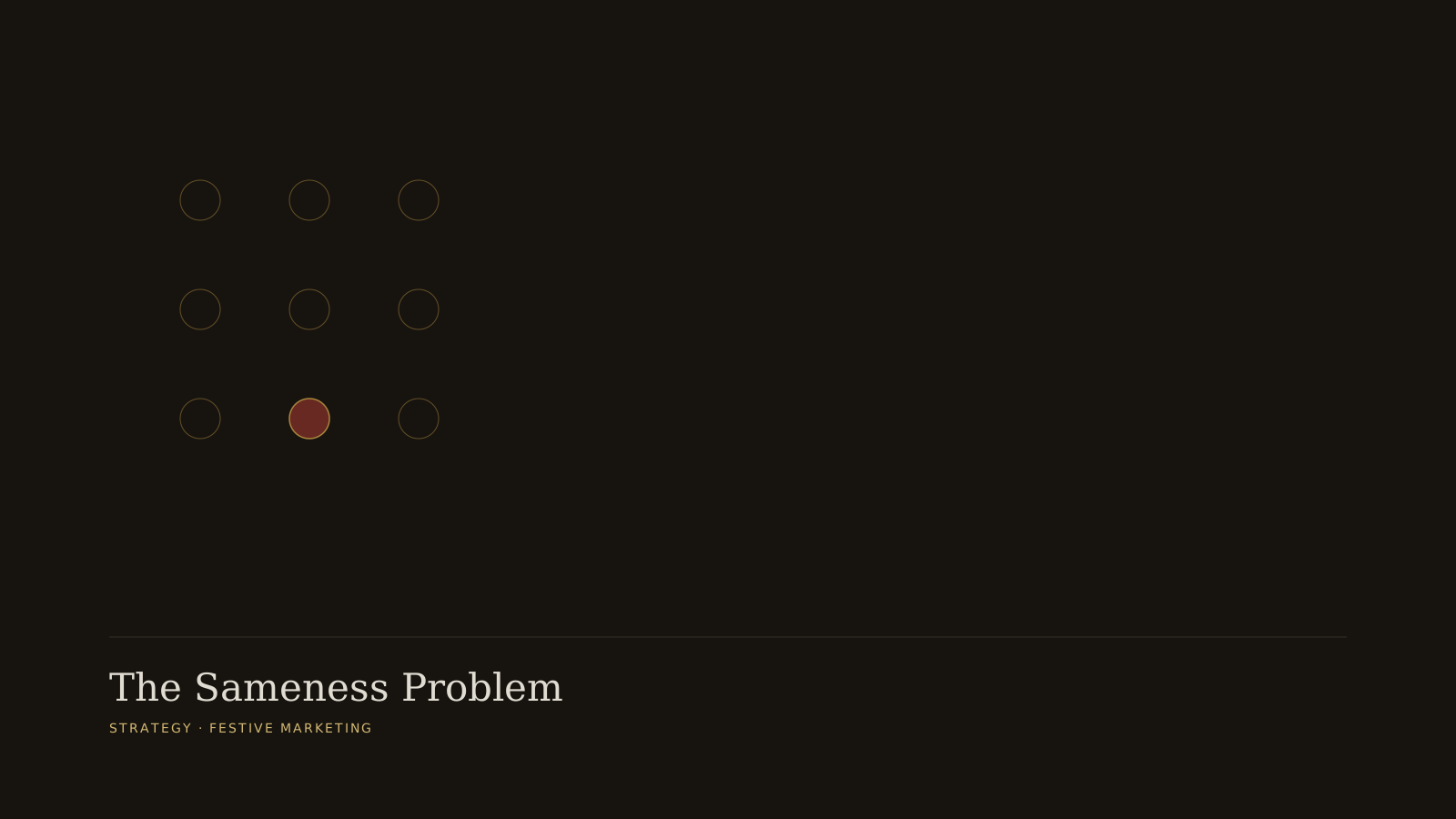
Every D2C Brand's Diwali Campaign Looks the Same. That's the Actual Failure.
Festive-season budgets go up every year and the ideas stay identical - the same warm family montage, the same discount countdown. Sameness during the one window when everyone is paying attention is the most expensive mistake a brand can make.

DocPharma Raised $2 Million to Be a Brand Nobody Buying Medicine Will Ever Hear Of
The Bengaluru startup's pre-Series A funds 100 new dark stores across 50 cities - infrastructure sold to other companies' branded apps, not to a single end consumer. That invisibility is the business model, not a marketing gap.
MS Dhoni Didn't Just Endorse SpeakX. He Invested In It. That's the Whole Pitch.
SpeakX added Dhoni as both a strategic investor and brand ambassador in the same announcement, collapsing two roles marketing teams usually keep separate. For an edtech category full of paid cricketer cameos, owning a stake changes what the endorsement is actually claiming.
WhatsApp Is India's Best Brand Channel. Most Founders Run It Like a Spam Folder.
Every Indian consumer brand has a WhatsApp number, and most use it to blast discount codes nobody asked for. The founders getting real value from it are using the same channel for something closer to a relationship.
Founder-Led Sales Isn't a Phase You Outgrow
Founders treat their own sales calls as an early-stage inconvenience to hand off as fast as possible. The ones who keep taking a few of those calls forever have a brand advantage the ones who delegate everything don't.
Your First Launch Was a Guess. The Second One Is the Real Positioning.
Most founders treat launch day as a single event to get right once. The founders who actually land on a category are the ones who treat the first launch as a hypothesis and the second as the correction.
Unacademy Sold for 94% Less Than Its Peak. The CEO's One Line Did More for the Brand Than the Deal.
Gaurav Munjal could have let the upGrad acquisition get spun as a strategic merger of equals. Instead he said out loud that the company sold at a fraction of its unicorn-era valuation - and that's the more interesting story.

'We Don't Know Yet' Is a Brand Statement, Not a Weakness
Founders default to confident answers even when the honest one is 'we're still figuring it out.' The confidence is what erodes trust the moment reality catches up with it.
Yuma Energy's $35 Million Round Buried the Real News: It Also Bought a Battery Maker
The headline is a Series A from Magna International. The more consequential decision is Yuma folding a battery manufacturer into a swapping network that was built to stay asset-light.
The Best Marketing Copy at Your Startup Is Sitting in Your Investor Update
Founders polish landing page copy for hours and treat the monthly investor email as a chore. That inversion is costing them their most credible writing.

Peeko Raised Rs 67 Crore to Bet Against Buying Baby Clothes Online
The Bengaluru babycare startup's Series A is a bet that quick commerce can fix the one thing pure e-commerce never solved for new parents - not being able to touch the product before it arrives.
Most Startup Apologies Are Written for the Lawyer in the Room, Not the Customer
The public apology has become a genre with its own tired grammar - passive voice, vague pronouns, a promise to 'do better.' That grammar exists to protect the company, and customers can tell.
The Waitlist Isn't a Queue. It's the First Thing You Publish.
Most founders treat a pre-launch waitlist as plumbing - a form that holds names until the product ships. Treated as content, it does more brand work than the launch itself.

Wipro Just Paid Rs 387 Crore for a Skincare Brand With No Factory of Its Own
The Dermatouch acquisition is a reminder that a legacy conglomerate didn't buy manufacturing capacity or shelf space - it bought a brand a five-year-old D2C team built from nothing.
Nobody Reads Your Post-Mortem for the Apology. They Read It for the Judgment Call.
Most founders treat a public post-mortem as damage control after a failure. Written well, it's one of the few documents that makes a company look more competent for having failed in public.
The Return Policy Page Is Where Most Brands Lose the Sale They Already Won.
A shopper who opens the return policy page has already decided to buy. Most brands hand that moment to a lawyer instead of a salesperson, and lose the sale on the last click.
Ringg's $10 Million Round Is a Bet That Voice AI Was Never Really About the Call Centre
Peak XV's extended bet on Ringg AI values the startup on how far its voice agents travel past the phone call - into WhatsApp, browsers, and enterprise workflows most 'voice AI' startups never reach.

Stock Photography Is Costing New Brands the One Thing They Can't Buy Back
A polished stock image looks like progress on a founder's to-do list. To a first-time visitor, it reads as evidence that nothing on the page is actually real yet.
Your Company's Name Isn't a Branding Decision. It's a Positioning One.
Founders pick names for how they sound, then hand the actual work of explaining the business to a tagline. The name should have done some of that work itself.
The FAQ Page Is a Sales Tool. Most Founders Treat It Like a Complaints Log.
Founders write FAQ pages to reduce support tickets, not to sell. That's why most of them read like a legal disclaimer instead of the second-best salesperson on the site.
The Investor's Name on Your Cap Table Is Marketing Collateral. Choose It Like It Is.
Founders negotiate valuation and board seats for months and treat brand halo as an afterthought. It shows up in every press mention, every cold pitch, and every candidate's due diligence for years after the round closes.
Yulu Raised $93 Million as a Bike-Share Brand. It's Actually Selling Fleets, Not Rides.
Yulu's Series C is built around quadrupling its EV fleet to 200,000 vehicles for delivery and quick-commerce partners - a business most of the public still associates with the yellow bikes they see parked on the street.

Airbound Raised $37 Million to Make Drones Cheaper Than Trucks. The Pitch Is the Point.
Airbound's Series A isn't just capital for more aircraft - it's a bet that 'cheaper than a truck' is a claim the company can actually prove, one hospital route at a time.

A Cockroach in a Blinkit Warehouse Is a Brand Story, Not Just a Compliance One
Maharashtra's FDA suspended the food licences of three Blinkit outlets this month over hygiene violations. The compliance problem gets fixed in weeks. The trust problem is the one worth watching.
The Careers Page Is a Marketing Document. Most Founders Treat It Like Paperwork.
A generic careers page tells every candidate, customer, and journalist who checks it that the company hasn't thought hard about who it wants to become.
Founders Spend Months on the Pitch Deck and Ten Minutes on the Website
The pitch deck gets rewritten before every board meeting. The company website sits untouched for two years - even though it's the one asset every stakeholder actually visits.

The Best Content Your Company Has Is Already Sitting in a Spreadsheet
Every company collects data nobody else has - support tickets, pricing patterns, usage logs. Publishing that data is a distribution channel most founders never open.

Building in Public Isn't a Personality. It's a Distribution Channel.
Most founders treat building in public as a running diary of feelings and milestones. The ones who actually get distribution from it are running something closer to a product function.
Every Co-Branding Deal Fails the Same Way: Both Sides Want to Be the Hero
Brand partnerships get pitched as a shortcut to a new audience. Most collapse in the deck stage for one reason - neither brand is willing to play the supporting role.
Honasa Walked Away From a ₹135 Crore Deal. That's the Discipline a House of Brands Needs.
Mamaearth's parent called off its acquisition of Fluence Pharma when closing conditions weren't met. For a multi-brand house built on acquiring category adjacencies, saying no on time matters more than the deal itself.
InspeCity Raised ₹100 Crore to Fix Satellites That Are Already in Orbit. That's the Smarter Pitch.
The Mumbai space-tech startup isn't selling a new rocket or a new constellation. It's selling longer life for hardware that already exists - and investors funded the maintenance story over the moonshot.
Vernacular Content Isn't Translation. It's a Second Brand.
Founders treat regional-language content as an English post run through a translator. The brands actually winning outside metro India built a distinct voice for it - not a dubbed one.
Founders Keep Waiting for the Right Time to Go Public With Their Story. There Isn't One.
Every founder has a reason to wait - too early, too busy, not enough traction yet. By the time the reason runs out, someone else has already told the story of your category.

Most Marketing Budgets Have No Room to Fail. That's the Actual Waste.
Founders build marketing budgets like they're buying a guaranteed outcome. The budgets that actually work are built like a bet with a deliberate loss column.
The Panel Circuit Is Free Media. Most Founders Waste It.
A conference invite is a marketing asset a founder didn't have to buy. Most founders spend it being agreeable instead of being remembered.

Runable Raised $21 Million to Let AI Agents Run Your Marketing. The Bet Is on Execution, Not Judgment.
Runable just raised $21 million to have AI agents run paid campaigns, cold outreach, and content calendars for small businesses. What it's actually betting on is that most of marketing was never judgment to begin with.
The Ghostwritten Founder Post Is Cheaper Today and More Expensive Every Year After
Outsourcing the founder's voice to an agency buys polish and consistency in the short run. What it quietly spends is the one asset a founder's own writing was supposed to build - the sense that a real person is behind it.
Your Price Is Not a Cost-Plus Calculation. It's a Positioning Statement.
Founders price by working backward from margin targets, then wonder why the market treats them as a commodity. Price is often the first claim a brand makes - before the copy, before the launch post, before anyone reads a word about what makes it different.

Pernia's Pop-Up Shop's Parent Is Spending Its IPO Money on Stores, Not Growth Marketing
Purple Style Labs is raising Rs 680 crore in an all-fresh-issue IPO, and most of it isn't going toward customer acquisition. It's going toward the physical experience centers the luxury fashion platform is betting are its real moat.

The Best Response to Some Controversies Is No Comment
Every founder eventually faces a moment that seems to demand a public statement. Reaching for one by default, instead of asking whether this particular fire needs the brand's name on it, is often the more expensive mistake.
Brand Spend Before Product-Market Fit Is Wasted. After Series A, It's Overdue.
Founders either spend on brand too early, polishing a story nobody has confirmed yet, or too late, after the category has already decided who the trusted name is. There's a narrow window in between, and almost nobody times it deliberately.
The Founder Should Answer the Angriest Customer, Not the Support Team
Founders route complaints to whoever is cheapest to hire, then wonder why every apology sounds the same. The complaint most likely to become a public story is the one a founder should never delegate.

The Most Useful Page in a Brand Guide Is the One Nobody Writes
Brand guidelines are full of what a company will do - fonts, colors, tone. The page that actually prevents damage is the list of what it will never do, and almost no one writes it down.

Third Wave Coffee's Rs 408 Crore Round Is a Bet on Cities That Haven't Asked for Specialty Coffee Yet
The WestBridge-led round pushes Third Wave Coffee's valuation past Rs 2,000 crore. The more telling number is where the new cafes are opening - Ludhiana and Jalandhar, not another mall in Bangalore.
Wispr Flow Bet on Hinglish, Not English. It's Now the Company's Fastest-Growing Market.
The Bay Area voice AI startup raised $280 million at a $2 billion valuation with India as its second-biggest market by users and subscribers. What got it there wasn't localisation as an afterthought - it was building for how Indians actually speak, code-switching included.

Atomberg Is Putting More of Its IPO Money Into Marketing Than R&D. That's Not a Red Flag.
Atomberg's Rs 450 crore fresh issue earmarks Rs 150 crore for brand and performance marketing against Rs 100 crore for R&D. For a company that turned a boring fan into a premium category, the ratio is the strategy.
Sachin Bansal Ran Navi on His Own Money for Eight Years. The Prosus Cheque Isn't About Needing Cash.
Navi's $100 million from Prosus is its first-ever outside institutional funding, arriving months before a planned IPO. For a founder who never needed the money, the round is doing a different job.
Founders Keep Selling Customers the Pitch They Wrote for Investors
The deck is built to convince twelve people with a spreadsheet open. The landing page has to convince someone with thirty seconds and no context. Most founders never rewrite the sentence between the two.

Whoever Names the Problem Owns the Category
Founders spend their positioning budget proving they are the best answer to a question a competitor already asked. The bigger prize goes to whoever asks the question first.

Word of Mouth Isn't Luck. It's Infrastructure Nobody Built.
Founders treat organic referrals as a happy accident to be grateful for, not a system to be engineered. The brands that grow on word of mouth for years, not months, built the plumbing for it early.
The Best Marketing Hire Is Not a Marketer
Founders who decide marketing deserves real budget default to hiring someone to run ads. What they need first is someone who can figure out what the ads should say.
Your Best Sales Team Doesn't Work in Sales
What employees say about a company, unprompted and unpaid, is trusted more than anything the company says about itself. Most founders fund the wrong half of that sentence.
A 22-Year-Old Brokerage Just Ran Its First Ad. It Wasn't About Trading.
Jainam has operated through 22 years of India's capital markets without a single brand campaign. Its first one skips speed and pricing entirely and pitches the company as a mentor instead.
Repetition Is Not Redundancy
Founders abandon their best message the moment they get bored of it, right around the point it was about to start working. Recognition is a frequency problem, not a creativity problem.
Zeeba Spent Years Proving Itself Abroad. Now It's Betting Amritsar Sells It at Home.
Zeeba built its name in 93 export markets before it ever made a serious pitch to Indian kitchens. Its packaging revamp and its choice of Vikas Khanna as ambassador both lean on the same idea - that credibility earned abroad has to be argued for, not assumed, at home.

HUL Took Beco to Court. Beco Got Exactly What It Wanted.
Hindustan Unilever has sued Beco's parent over a campaign naming Surf Excel and Vim. For a challenger brand a fraction of HUL's size, the lawsuit is the distribution.
You Don't Have an Audience. You Have a Lease.
A hundred thousand followers is not an asset if the terms can change overnight and you cannot reach a single one of them without permission. Most founders have never checked which one they own.
'Our Product Speaks for Itself' Is a Distribution Decision Disguised as a Principle
Founders say it as a mark of integrity. What it actually does is hand the job of explaining your product to whoever is willing to do it louder.
Nobody Believes 'Trusted by Leading Brands.' Everybody Believes a Number.
The claims founders reach for first are the ones buyers have been trained to discount. Specificity is not a copywriting preference - it is the only currency credibility trades in.

Temple Is Priced at ₹80,000 Before Anyone Has Worn One. That's the Strategy.
Deepinder Goyal's wearable is heading into pre-orders at a price most Indian hardware brands would never attempt. The price is doing work the product cannot do yet.
You Don't Know a Brand's Real Voice Until Something Breaks
Every brand sounds confident when things are going well. The actual voice - the one worth building trust on - only shows up during a recall, an outage, or a mistake made in public.

Founders Chase 'Different.' They Should Be Chasing 'Recognisable.'
Most positioning work is spent proving a product is functionally different from competitors. That advantage rarely survives a quarter. What survives is being instantly recognisable - and almost nobody budgets for it.

River Mobility Just Raised $120 Million. The New Money Isn't the Number.
Toyota and Yamaha have backed River Mobility since near the start. What's new in this Series C is who else showed up - and what that says about India's willingness to underwrite EV manufacturing at scale.
Vaaree Raised ₹65 Crore to Sell a Vibe, Not a Catalog
Home decor is a category where a thousand sellers stock the same imported SKUs. Vaaree's Series A is a bet that curation and AI styling can be the moat that price never was.
Most Brand Stories Aren't Stories. They're Timelines.
Founded in a garage, bootstrapped for three years, now serving a million customers - that's a sequence of facts, not a story. Here's what actually makes a brand narrative land.
Why Nikhil Kamath Putting ₹200 Crore of His Own Money Into CtrlS Matters More Than the Number
Kamath and Sreeram Reddy Vanga just wrote personal cheques worth ₹250 crore into CtrlS Datacenters. The size is not the story - whose name is attached to it is.

A Podcast Is Not Content. It's a Credibility Instrument.
Founders keep asking whether a podcast is 'worth the time' by measuring it like a content channel. That's the wrong instrument to measure it with.
Shiprocket's 35% Listing Pop Is a Verdict on Every D2C Brand It Ships For
Shiprocket listed at a 35% premium and closed subscriptions 99x over. The number that should worry competitors isn't the pop - it's what investors just said about owning the infrastructure layer.

Your Company Doesn't Have a Brand Problem. You Have a Face Problem.
Most founders delay personal branding until the company 'needs' it. By then, a competitor's founder has already taken the attention that was available for the category.
Paid Ads Rent Attention. Earned Media Buys Equity.
Marketing budgets treat PR and paid ads as line items in the same category. They behave nothing alike over time - and only one of them keeps paying out after the spend stops.
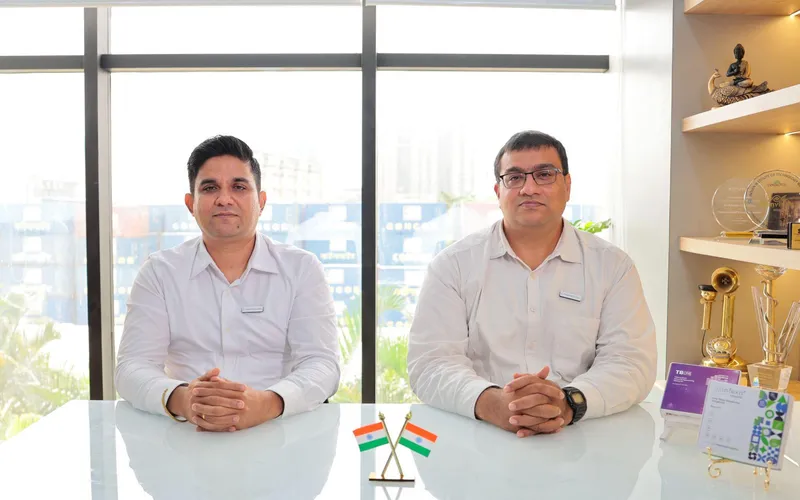
HaystackAnalytics Ushers in the Most Advanced Technology to Bridge the Diagnostic Gap in Infectious Diseases
HaystackAnalytics is scaling its Genomic Centres of Excellence network to 100 sites across India within 12 months, bringing advanced infectious-disease diagnostics closer to patients and clinicians.

Verdant Raises ₹42Cr Series A - And Skips the Usual D2C Playbook
No influencer blitz, no discount-led growth. Verdant's Series A round is a bet that slow, ingredient-first skincare can still win in India's noisiest category.

Mistry & Sons Just Rebranded After 60 Years. Here's Why It Didn't Backfire.
Legacy FMCG rebrands usually alienate the loyal base chasing a younger one. Mistry & Sons found a rare third way - and the data says it's working.

The Quiet Rise of India's Direct-to-Retail Startups
D2C brands spent a decade avoiding retail. A new cohort is skipping marketplaces entirely and going straight to the shelf - on their own terms.