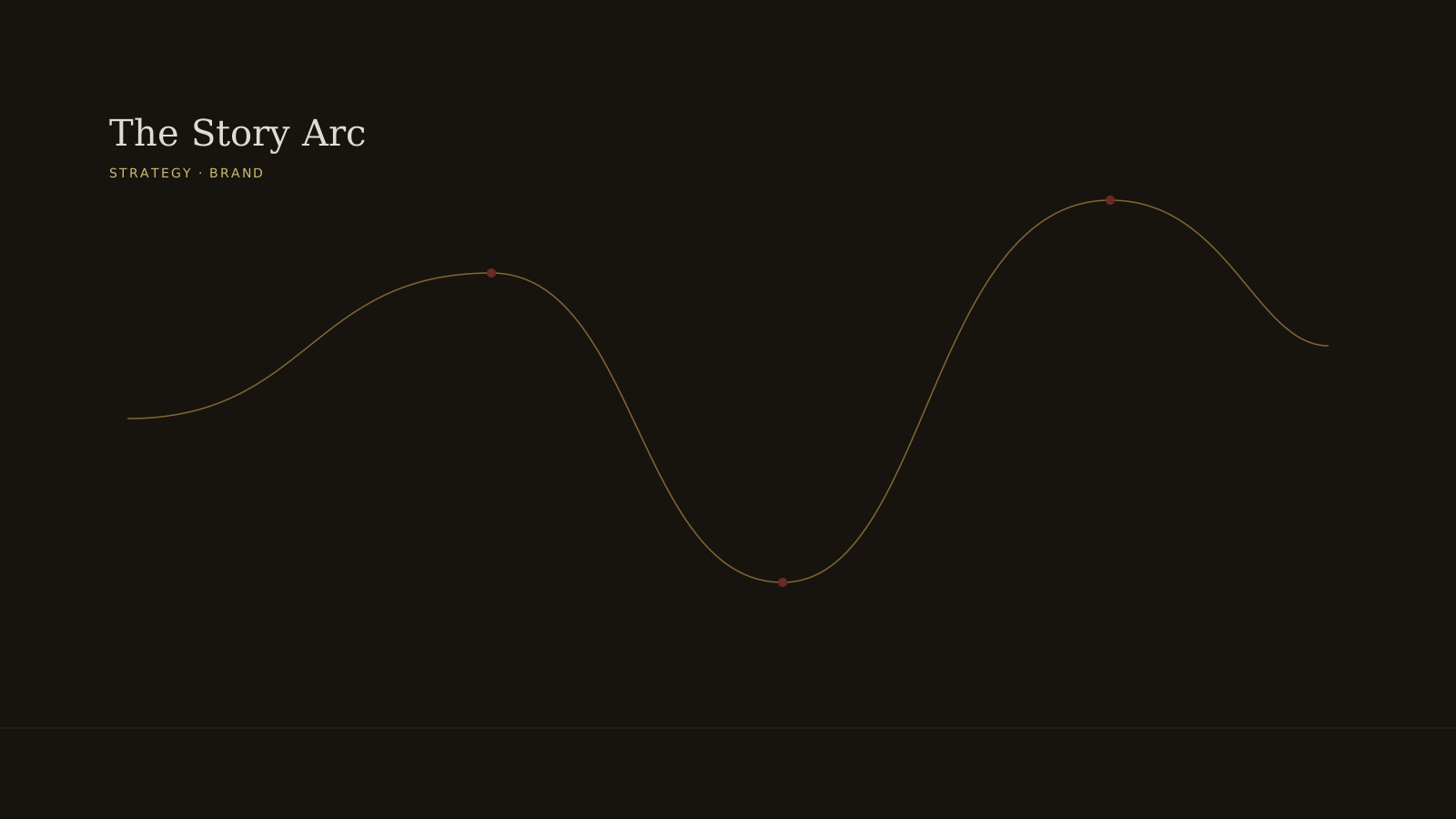
Ask a founder to tell their brand story and most will recite a timeline. Started in 2019. Bootstrapped for two years. First hundred customers came from a WhatsApp group. Crossed a million users last quarter. Every fact in that sequence is true, and none of it is a story - it’s a resume with better production values.
A timeline tells you what happened. A story tells you what it cost, and what almost didn’t happen instead.
The missing ingredient is the decision that could have gone the other way
Every brand story that actually holds attention has a moment where the outcome was genuinely uncertain - a decision made with incomplete information, against advice, at real cost, where the founder didn’t know it would work. That moment is the whole story. Everything before it is setup, and everything after it is consequence. Strip that moment out and you’re left with a highlight reel, which is precisely what every competitor’s About page also looks like.
This is why “we started because we saw a gap in the market” fails as an opening line. It’s not false, it’s just not specific enough to be a decision anyone could have made differently. Compare it to: “we turned down a distributor deal worth more than our entire first year of revenue because it would have meant white-labelling the product.” The second version has stakes. The first has a market-research slide.
Specificity is the only thing that survives repetition
A story gets told hundreds of times - by the founder in interviews, by employees to candidates, by customers to their friends. Vague stories degrade with each retelling, because there’s nothing precise enough to hold onto; they turn into “yeah, they started small and grew.” Specific stories survive the retelling intact, because the specific detail is the part people remember and repeat: the exact number turned down, the supplier who said no twice, the three days the product didn’t work at all.
If a story can’t be repeated by someone who wasn’t in the room and still land, it wasn’t specific enough to begin with.
A true story that can’t be checked isn’t an asset
The best brand stories are verifiable in principle, even if nobody ever checks. A founder who says “we rejected that acquisition offer” should be able to name the acquirer, if pressed, even if the piece never does. That verifiability is what separates a story from a claim, and audiences can tell the difference even when they can’t articulate why - it shows up as trust in one founder’s telling and mild skepticism toward another’s, for reasons neither reader could fully explain.
The story isn’t marketing collateral sitting next to the product. Told well, it’s the reason a stranger decides the product is worth trying before they’ve seen any proof it works.