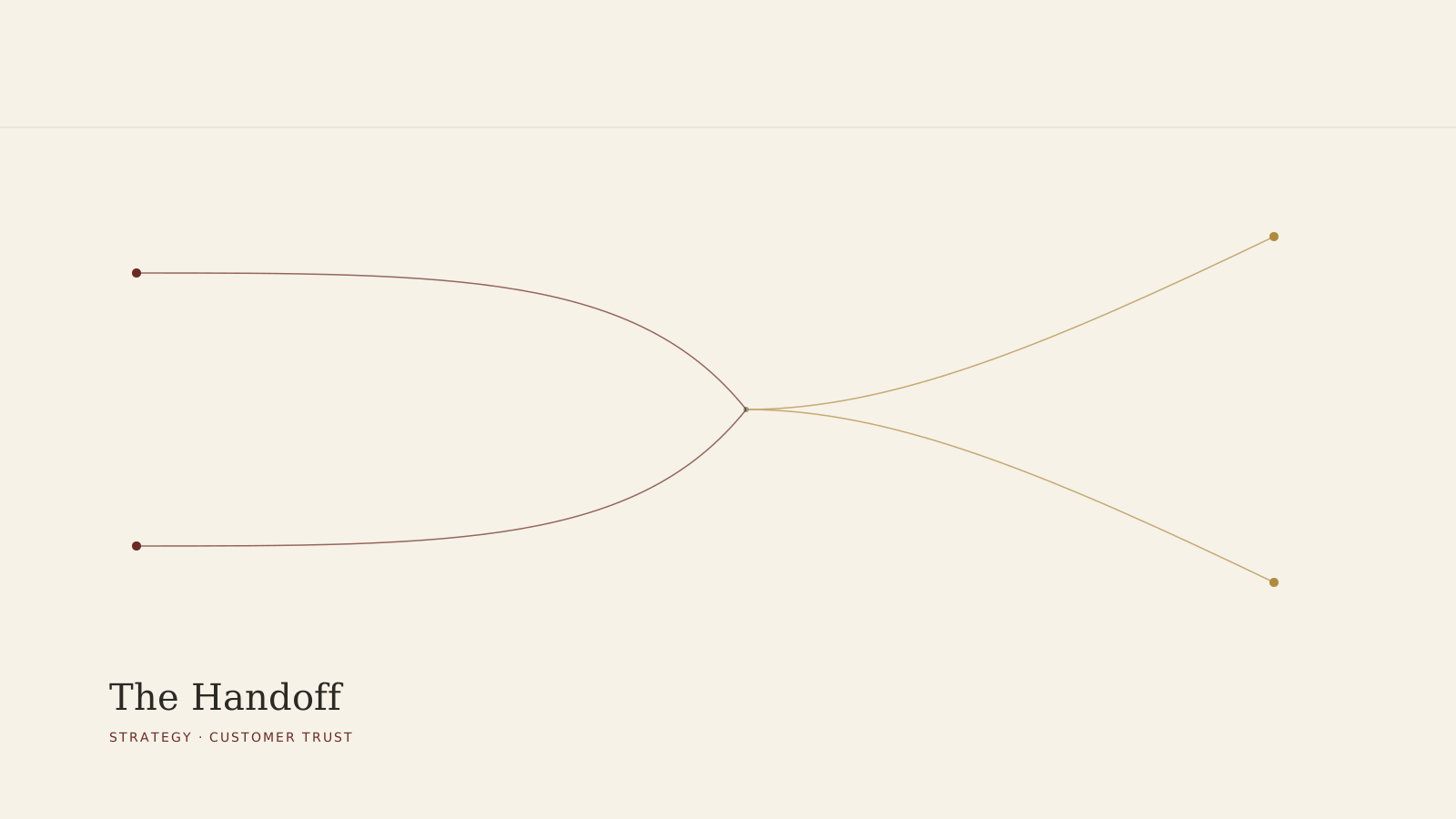
The sales conversation is the most rehearsed, most brand-controlled moment in a company’s relationship with a customer. Someone has thought carefully about what gets said, in what order, with what tone. Then the deal closes, the customer gets routed to a different team, and almost none of that care travels with them.
The failure shows up in a specific, recognizable way: a new customer’s first support ticket repeats something they already told the salesperson, in writing, three weeks earlier. Name, use case, the specific problem they’re trying to solve - all of it re-asked by someone who sounds like they’re meeting the account for the first time, because they are. Nothing says “you were never more than a line item” faster than that.
It gets treated as logistics, not brand
Most companies do solve the handoff mechanically - a CRM field gets filled, a Slack channel gets created, an account gets tagged. What almost nobody manages is the tone discontinuity. Sales says “we’ll take care of you” in a warm, specific, personal register. Support opens the relationship with a macro. Both teams did their job correctly by their own metrics, and the customer still felt the seam.
That seam is a brand decision sitting unowned between two departments that each think it’s the other one’s problem.
What a good handoff actually requires
Not a dump of CRM notes - nobody downstream reads twelve fields of metadata before replying to a ticket. A good handoff is short: three or four facts that let the first support reply sound like it already knows the account. What they bought it for. What almost made them not buy. One detail from the sales conversation specific enough that repeating it back signals continuity instead of surveillance.
Companies will write careful onboarding email sequences and polish a pricing page for months, and leave this one conversation - the first real one after money changes hands, happening identically to every paying customer - running on whatever the support team happens to improvise that day.