There is a specific moment founders chase without naming it: the month where their name is on three podcasts, a panel, a founder Slack AMA, and a LinkedIn post that does six figures of impressions, all in the same four weeks. It feels like momentum. Internally, teams call it “founder is everywhere right now” and treat it as a KPI.
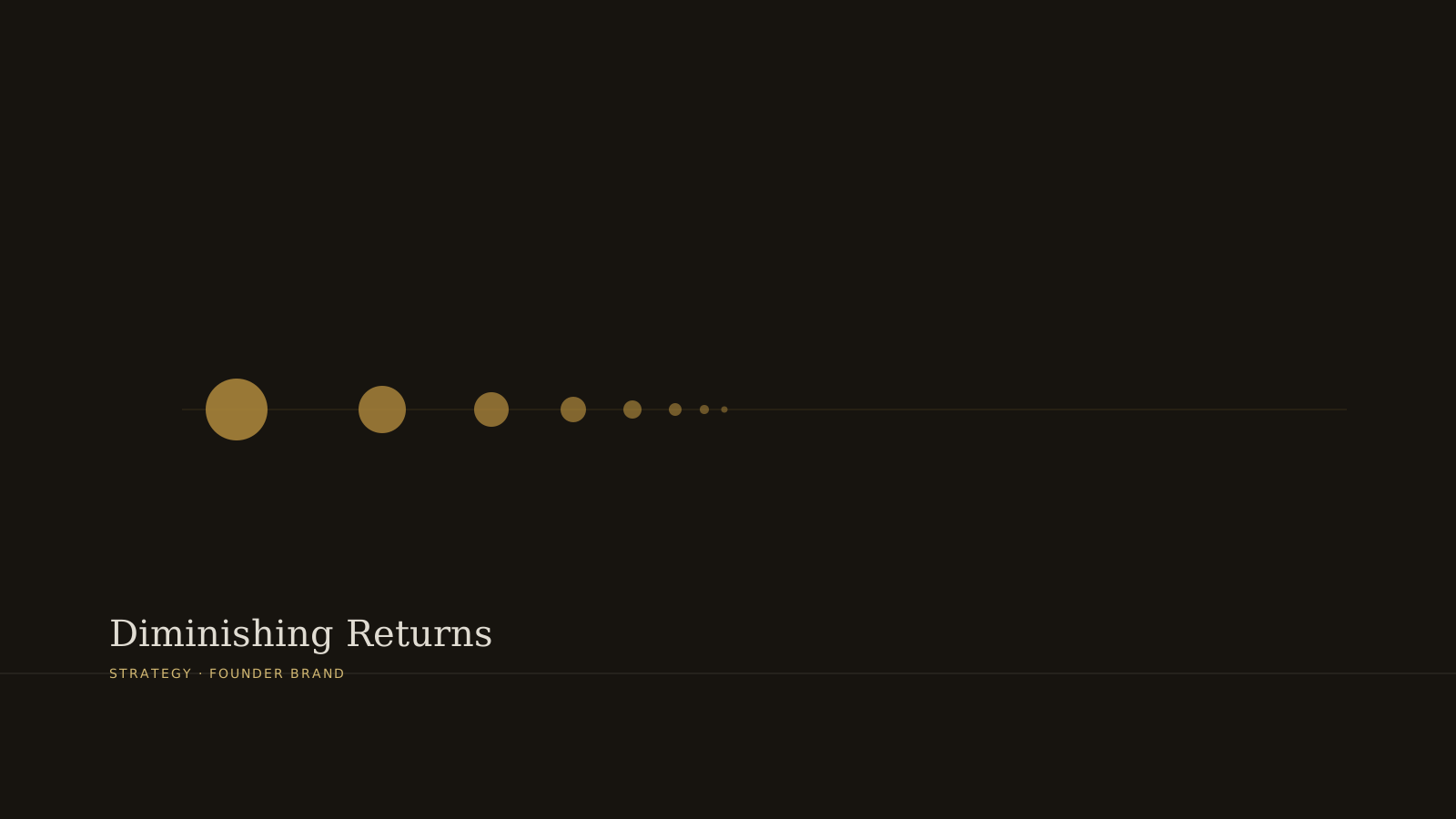
It isn’t one. Attention is not a resource that compounds just because it is spent more often. Past a certain frequency, the same audience sees the same founder say a close variant of the same three stories on a fourth, fifth, and sixth platform in a month, and the thing that made the first appearance land - the sense that this person was saying something worth hearing, once - starts to erode.
What actually gets spent
Scarcity is doing real work in why a founder’s media appearance lands at all. A founder who shows up rarely, and says something specific when they do, gets read closely. A founder who shows up constantly gets skimmed, then muted, then unfollowed - not because the content got worse, but because the audience’s attention budget for that one person ran out faster than the founder’s appearance calendar did.
The same dynamic shows up with journalists and podcast hosts, who notice when a founder is doing the rounds and start treating the appearance as filler rather than a get. A founder who says yes to everything in a six-week window is, without meaning to, training every host who books them to expect a tired, recycled version of the same three anecdotes - because that’s what a founder running on four other interviews that week actually has left to give.
The distinction worth making
This is not an argument for scarcity as a strategy in itself, which is its own trap - a founder who disappears for six months has no stronger a hand than one who’s everywhere. The actual skill is treating appearances as inventory with a real cost, not a free channel: picking the two or three platforms a quarter where the founder has something genuinely new to say, turning down the rest even when they’re flattering, and protecting the handful of stories that still land because they haven’t been told six times already this year.
Founders rarely regret the panel they said no to. They regret the one where, halfway through, they realized they’d already told this exact story better, three weeks ago, to a smaller and more tired room.