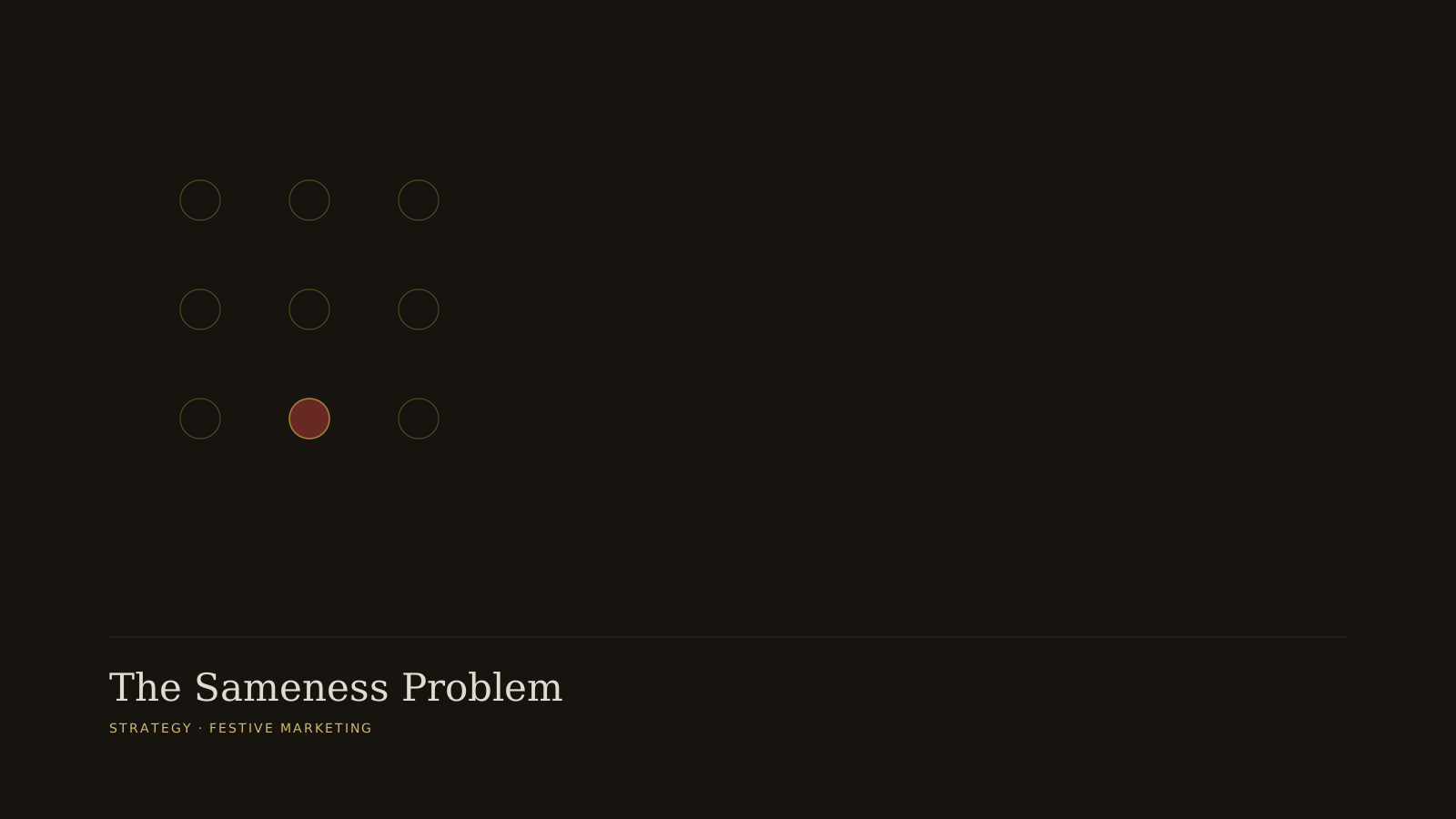
Festive season is the one stretch of the calendar when every brand in India gets guaranteed attention. Ad spend triples, inboxes fill up, and nearly every D2C founder reaches for the same lever: a family montage, warm lighting, a diya, a countdown timer ticking toward a discount. By the third week of the season, the creative from a mattress brand, a skincare brand, and a jewellery brand is close to interchangeable.
The problem isn’t the format, it’s the sameness
There’s nothing wrong with a festive ad using family, light, and gifting - that’s the actual emotional territory of the season, and ignoring it would be its own mistake. The failure is that almost every brand stops at the same three images and calls it a campaign. When an entire category runs the identical playbook in the same six-week window, the brand spending the most during that period gets remembered, and the brand with the sharper idea gets lost in the volume.
Attention is rented, at a premium, during exactly this window
Festive-season CPMs climb because every brand is bidding on the same eyeballs at once. That makes it the worst possible time to run generic creative - a founder is paying peak prices for attention and then handing the audience nothing to distinguish the ad from four others in the same feed. The brands that actually gain share in this window aren’t the ones spending more. They’re the ones whose creative doesn’t need the logo to be identifiable, because the idea itself is specific to that brand’s position, not to the festival in general.
What a distinctive festive campaign actually requires
It requires deciding, before the calendar forces the decision, what the brand’s own angle on the season is - not “family” as a category-wide theme, but a specific point of view a competitor wouldn’t have signed off on. A founder who has done the positioning work the rest of the year already has that angle sitting in their notes. A founder using the festive push as the first time all year they’ve said anything specific about the brand will default to the same three images everyone else uses, because there’s nothing else to draw on.
The actual cost of sameness
The measurable cost isn’t a bad campaign - reach numbers will look fine, because paid media guarantees reach regardless of the idea. The cost is invisible: a shopper who saw five nearly identical ads in the same week remembers that the category had a sale, not which brand ran it. Six weeks of the year’s highest ad spend, converted into an outcome any competitor could have bought with the same budget, is the actual failure - not the click-through rate, which is what most post-campaign reports will flag instead.